
Why Does My Jaw Pop But Doesn't Hurt

Hey there, ever been mid-chew, maybe enjoying a particularly crunchy pretzel or a surprisingly tough piece of jerky, and suddenly… POP! That little sound from your jaw, right near your ear? And the weirdest part is, it doesn't even hurt! It's just this… noise. Like a tiny, unexpected drum solo happening in your head. If this sounds familiar, you're definitely not alone. Lots of us experience this jaw-popping phenomenon, and it's a pretty neat little biological quirk.
So, what's going on in there? Is your jaw trying to tell you something? Is it a secret code? Or is it just… doing its thing? Let's dive into this fascinating little mystery, shall we? No need for a medical degree, just a curious mind and maybe a slightly more aware jaw.
The Marvelous Mechanics of Your Jaw
First off, let's get a basic understanding of how your jaw, technically called the temporomandibular joint (or TMJ for short – though we'll get to the whole "TMJ disorder" thing later), actually works. Think of it as a super-smooth hinge, but with a bit of extra flair. It's not just a simple up-and-down movement like a door hinge. Your jaw can move up and down, side to side, and even forward and back. Pretty versatile, right?
The magic happens because of a little disc inside the joint called the articular disc. Imagine it like a tiny, rubbery cushion or a shock absorber nestled between the bones of your jaw. This disc helps your jaw glide smoothly when you open and close your mouth, talk, or chew. It's a crucial little player in the whole operation.
The "Pop" Mystery: What's Making the Sound?
Now, about that pop. The most common reason for a painless jaw pop is related to this articular disc. Sometimes, this disc can get slightly displaced or move out of its ideal position for a moment. When you move your jaw in a certain way – like opening it wide or chewing something tough – the disc might slip back into its proper place. And that sudden movement, that little shift, is what creates the audible pop or click you hear.
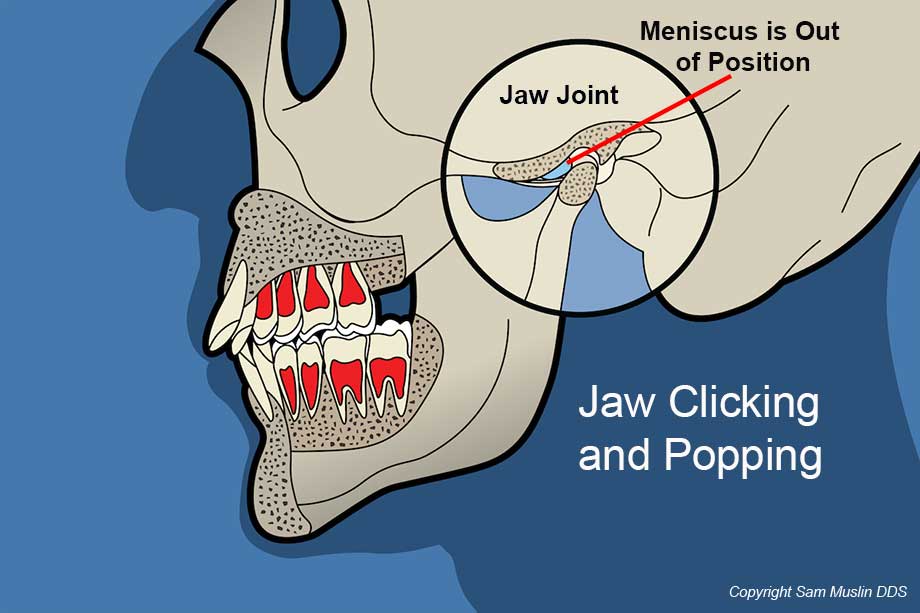
Think of it like this: Have you ever had a kink in a garden hose that you had to wiggle just right to get the water flowing smoothly again? Or maybe the sound your elbow makes when you bend it at a specific angle? It's a similar idea. Your jaw joint is just trying to find its perfect alignment, and sometimes, that journey comes with a soundtrack.
Another theory involves the synovial fluid. This is the lubricating fluid within your joint that keeps everything moving like a well-oiled machine. When you move your jaw, tiny gas bubbles can form and then collapse within this fluid. This bubble collapse can create a popping sound, much like cracking your knuckles. Ever notice how cracking your knuckles doesn't hurt either? It's that same principle of pressure changes within a fluid or joint.
Why No Pain? The All-Important "No Hurt" Factor
This is the key part, right? The fact that it's painless is usually a good sign. When the pop is accompanied by pain, stiffness, or difficulty moving your jaw, that's when it might signal a more significant issue, like TMJ disorder. But when it's just a quick, painless pop, it often means that your joint is still functioning pretty well, even if there's a little bit of subtle movement happening with that disc or fluid.

Your jaw is a busy place. It's constantly on the go, working hard to help you enjoy all sorts of delicious foods. Given all that action, a little bit of minor displacement of the articular disc or gas bubble formation in the synovial fluid is, frankly, pretty common. Your body is remarkably adaptable, and it can often compensate for these small shifts without causing any discomfort.
It's kind of like having a squeaky door in your house. It’s annoying to hear, but as long as the door still opens and closes perfectly fine, you might not rush to oil it, right? Your jaw is just making a little noise, but the core function remains intact.

Is It "Normal"?
So, is this popping jaw a cause for concern? For the most part, if it's painless and doesn't limit your jaw's movement, it's generally considered within the realm of normal variation. Many people have jaw clicks or pops that come and go throughout their lives. It’s just part of how their unique jaw mechanics work.
Think about all the different ways people's bodies are unique. Some people are naturally more flexible, others have a higher pain tolerance. Your jaw joint is no different. It has its own little quirks and characteristics. This painless pop is just one of those quirks.
However, it's always good to be aware of your body. If the popping starts to be accompanied by pain, swelling, clicking that is very loud or frequent, difficulty opening or closing your mouth, or locking of the jaw, then it's definitely time to chat with a doctor or dentist. These could be signs of TMJ disorder, which might require specific treatment.

When to Get Curious (and Maybe a Little Concerned)
As we mentioned, the absence of pain is the big differentiator here. If your jaw joint starts feeling achy, stiff, or makes it hard to eat your favorite crunchy snacks, then that painless pop might be trying to tell you something a bit more serious is going on. This could be due to:
- Arthritis: Just like other joints, the TMJ can be affected by arthritis, causing inflammation and pain.
- Injury: A direct blow to the jaw or even prolonged teeth grinding can affect the joint.
- Disc Derangement: The articular disc itself might be damaged or severely out of place, leading to pain and dysfunction.
- Muscle Strain: Overworking your jaw muscles through excessive chewing (like gum!) or clenching can cause discomfort.
These are the scenarios where the pop isn't just a quirky sound effect; it's a symptom that needs attention. But again, if it’s just a little pop and nothing else, it’s usually just your jaw saying hello in its own peculiar way.
The Fascinating World of Our Joints
Ultimately, the painless pop in your jaw is a small reminder of the intricate and amazing engineering that is your body. It's a testament to the smooth operation of your temporomandibular joint, with its articular disc and lubricating fluid, working together to allow you to enjoy life's bites, big and small. It’s a little bit of biological poetry, a subtle symphony of movement. So, the next time you hear that little pop, instead of wondering if something's wrong, you can perhaps appreciate the fascinating mechanics at play. It’s just your jaw doing its thing, and for the most part, it’s doing it pretty darn well!