
Why Are You Leaving Your Current Job

I remember this one time, I was at my old job, and we were having one of those super important all-hands meetings. You know the kind – where everyone’s trying to look engaged, but you can practically hear the collective brain cells migrating to the snack table. Anyway, the CEO was up there, all rah-rah, talking about how we were a "family" and how we were all "in this together." Meanwhile, I’d just spent the last hour wrestling with a printer that seemed to have developed a personal vendetta against me, and my desk was a minefield of half-eaten granola bars and crumpled TPS reports. Family? More like a dysfunctional co-dependent unit held together by lukewarm coffee and mutual despair, I thought. And then, he said it. "We’re all here because we believe in the mission." My hand shot up faster than a caffeinated squirrel. "Excuse me," I piped up, trying to sound both earnest and slightly less jaded than I felt, "but what is the mission, exactly?" The CEO blinked. The room went silent. The only sound was the faint whirring of the aforementioned evil printer. It was… awkward. And in that moment, a tiny seed of "maybe this isn't it" was planted.
Now, I’m not saying every job is like that, or that your current gig is a printer-fueled nightmare. Far from it! But that little anecdote? It gets to the heart of it, doesn't it? That feeling of disconnect, of questioning the why behind the daily grind. It's often the first whisper that it might be time to pack up your metaphorical (or literal!) desk and explore new horizons. So, let’s dive into this whole "why are you leaving?" question, not as some stuffy HR interrogation, but as a friendly chat over a virtual coffee. Because let's be honest, this is a question that pops up more often than we’d like to admit, both in our own heads and in those dreaded exit interviews.
The Big Questions: Beyond the Buzzwords
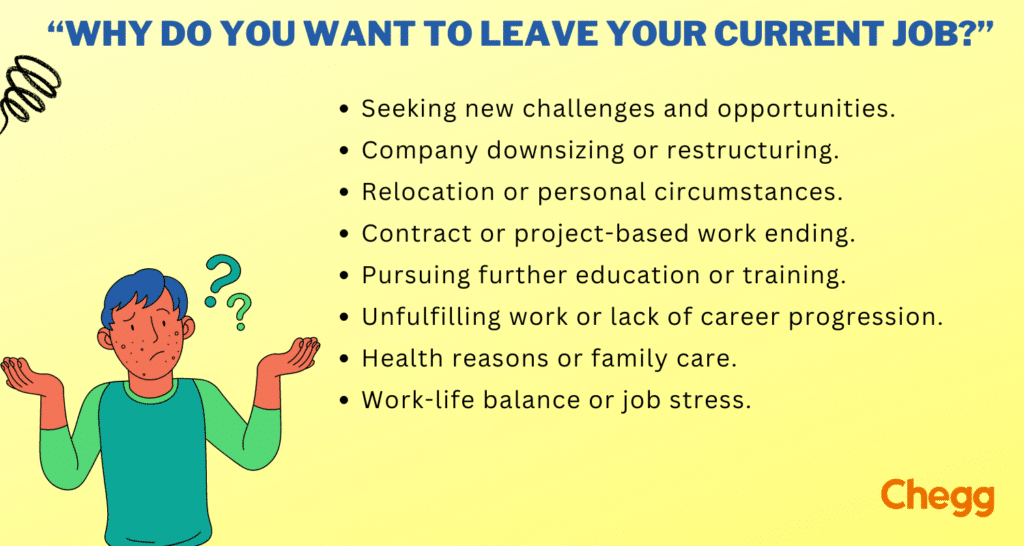
We’ve all heard the stock answers, right? "Seeking new challenges," "career advancement," "better work-life balance." And hey, those are legitimate reasons! But sometimes, the real story is a little more nuanced, a little less polished. It's about that gut feeling, that subtle shift in your internal compass. Think of it as the professional equivalent of realizing your favorite pair of jeans just doesn't fit anymore. It's not a betrayal; it's just… time for a change.
So, what are those deeper currents pulling you towards the exit? Let's get real.
The Stagnation Station: When Your Brain Starts to Rust
Remember when you first started your job? The excitement! The learning! The feeling of being able to conquer the world, or at least your inbox. Fast forward a few years, and… crickets. If your day-to-day feels like you’re on a hamster wheel, running the same race with the same scenery, it’s a sign. A big, flashing neon sign that says, "Danger: Stagnation Ahead!"
It's not about being lazy. Oh no. It's about that innate human drive to grow, to learn, to do something meaningful. When your skills are gathering dust, your curiosity is on permanent vacation, and the most exciting part of your week is figuring out what to order for lunch (again), it’s a pretty solid indicator that your professional development has hit a wall. And walls, my friends, are meant to be climbed over, or at least gone around.
Have you ever found yourself explaining a concept you’ve explained a hundred times, and you can feel your soul slowly draining out of your ears? Yeah, that. That’s the feeling of being stuck in the Stagnation Station. You’re good at what you do, perhaps too good, to the point where it’s become… monotonous. And monotony, while sometimes comforting, is rarely fulfilling. It’s like eating the same flavor of ice cream every single day. Delicious at first, but eventually, you start craving a sprinkle of something new, a swirl of excitement.
This isn't a judgment, by the way. We've all been there. We've all had those jobs where we were competent, reliable, and… utterly bored. The trick is recognizing it and having the courage to say, "You know what? My brain deserves better than this!" You’re not ungrateful; you’re simply recognizing that your own potential is being underserved. And that’s a perfectly valid reason to seek pastures greener, or at least, pastures with more interesting problems to solve.
Think about it: when was the last time you learned something genuinely new at work? Not just a new shortcut for Excel, but a new skill, a new perspective, a new way of thinking? If the answer is hazy, or if it was that time you finally figured out how to unjam the aforementioned printer, it might be time to consider an upgrade. Your brain is a muscle, and like any muscle, it needs to be exercised. If yours is feeling more like a well-worn armchair, perhaps it’s time for a new gym.
The Culture Clash: When Your Vibe Doesn't Match Their Vibe
Culture. It’s a buzzword that gets thrown around a lot, isn't it? But it’s also incredibly important. Think of it as the personality of your workplace. Is it a quirky, collaborative artist’s studio? A high-octane, results-driven sports arena? Or maybe, just maybe, it’s a dimly lit room where everyone communicates through passive-aggressive emails and eye-rolls. We’ve all encountered the latter, haven’t we?
When your personal values, your communication style, or your general approach to life just doesn’t mesh with the prevailing culture, it’s like trying to wear a tuxedo to a beach party. You might look the part, but you’re going to feel incredibly out of place. And that constant feeling of being an outsider, of having to code-switch your personality every day, is exhausting.
This isn't about finding a workplace where everyone agrees on everything. That would be incredibly dull. It's about finding a place where you feel seen, heard, and valued for who you are. It’s about a shared understanding of what’s important, what’s acceptable, and how people treat each other.
For instance, I once worked at a place where “feedback” was synonymous with thinly veiled criticism delivered in hushed tones during hallway encounters. My natural inclination is to be open and direct, to have a constructive conversation. But in that environment, it felt like I was walking on eggshells, constantly interpreting unspoken meanings. It was like trying to have a conversation underwater – muffled, distorted, and ultimately, frustrating.
On the flip side, I’ve also been in workplaces where collaboration is king, where ideas are welcomed with open arms, and where mistakes are treated as learning opportunities. The difference? Immense. In the latter, I felt energized, motivated, and like I was part of something bigger. In the former? Let's just say I spent a lot of time perfecting my poker face.
So, if you find yourself dreading team meetings, if you’re constantly biting your tongue, or if the general atmosphere feels more toxic than a reality TV reunion special, it’s a strong signal that the culture might not be the right fit for you. And that’s okay! There are millions of workplaces out there, each with its own unique flavor. You deserve to find one that complements yours, not one that clashes with it.
It’s also worth considering the leadership style. Are the leaders inspiring and supportive, or are they more… dictatorial? Do they foster an environment of trust, or one of fear? Your perception of leadership can have a massive impact on your overall job satisfaction. If you’re constantly looking over your shoulder, or if you feel your contributions are never truly appreciated by those at the top, that’s a pretty big red flag waving in your face.
The Mission Mismatch: When Your "Why" Fades
Remember that CEO and his "mission"? Well, sometimes, you realize the mission itself just isn’t resonating with you anymore. Or perhaps, you never truly bought into it in the first place. This is especially common if you joined a company based on its initial promise or a perceived alignment of values, only to find that the reality is a bit… different.
It’s not about being cynical. It’s about realizing that your personal sense of purpose might be evolving, and the work you're doing is no longer fueling that. We all have different motivations. Some people are driven by making a profit, some by making a difference, and some by simply being part of a team that’s building something cool. When your core motivators are no longer being met by your job, it’s like trying to drive a car on fumes. You might be moving, but you’re not going to get very far, and you’ll be constantly worried about running out.
I’ve seen friends leave jobs in highly profitable corporations because they felt their work, while financially rewarding, lacked a tangible impact on the world. They wanted to feel like they were contributing to something good, something that left a positive mark. And that’s a powerful drive! Conversely, I’ve also known people who’ve left non-profits because they realized the mission, while noble, wasn't aligning with their personal career aspirations or the practical realities of their own financial needs.
It’s a delicate balance, isn’t it? Finding work that aligns with both your values and your practical needs. But when that alignment breaks down, it’s a significant reason to consider a move. Are you proud of what your company does? Do you believe in its impact? Or do you find yourself deflecting questions about your work with a vague wave of the hand and a quick change of subject?

If your job feels like a purely transactional exchange – time for money – and there’s no underlying sense of purpose or belief in what you’re contributing, it’s bound to lead to burnout and dissatisfaction. You're essentially asking yourself to pour your energy into something that doesn't ignite your passion. And that’s a recipe for a very long, very uninspiring career.
The beauty of being human is that our priorities change. What was important to you five years ago might not be important today. And that’s okay! It means you’re growing, you’re learning, and you’re becoming more self-aware. If your current job no longer serves that evolving sense of purpose, it’s not a failure; it’s a natural progression.
The Opportunity Knock: When a Better Door Opens
This is the classic "shiny new object syndrome" but in a good way! Sometimes, it’s not about what’s wrong with your current job, but about what’s right about a new opportunity. A dream role pops up. A company you’ve always admired is hiring. A chance to work with someone you truly respect lands in your lap. These are the moments that make you sit up and pay attention.
It’s like being in a perfectly comfortable relationship, but then someone walks into the room who truly excites you, who offers something you haven't experienced before. It’s not that your current situation is bad; it’s just that this new possibility is… more. More challenging, more aligned with your ultimate goals, more exciting. And who are we to ignore that?
This is where networking, staying informed about your industry, and having a clear vision of your career path become incredibly valuable. When you know what you want, you can recognize it when it appears. It’s not about being greedy; it’s about being strategic about your own growth and happiness.
I remember a friend who was perfectly content in her role. She was good at it, her colleagues were nice, and the pay was decent. Then, a recruiter reached out about a position at a startup that was working on something truly innovative in her field. The salary wasn't significantly higher, but the opportunity to be at the forefront of a new technology, to have a more direct impact, and to work in a fast-paced, dynamic environment was irresistible. She took the leap, and she’s never looked back. It wasn’t that her old job was bad; it was that the new one was a better fit for her evolving ambitions.

This is often the most positive – and sometimes the most guilt-inducing – reason to leave. You might feel a pang of guilt for leaving behind colleagues you care about or a stable environment. But remember, your career is ultimately yours. You have a responsibility to yourself to seek out opportunities that will foster your growth and bring you fulfillment. And if a better door opens, it’s perfectly reasonable to walk through it.
It's also important to distinguish this from simply chasing a higher salary. While compensation is a factor, a truly compelling opportunity will offer more than just a bigger paycheck. It will provide growth, learning, impact, and a sense of purpose. If all you're chasing is more money, you might find yourself in a similar situation down the line, just with a fatter bank account.
The "Why Not" vs. The "Why": A Subtle Distinction
It’s easy to get caught up in the "why not" of staying. "Well, it's not that bad." "At least I have a job." "It's too much hassle to leave." These are the voices of comfort and inertia. They’re the easy path, the well-trodden road.
But the real, sustainable fulfillment comes from the "why." Why are you choosing to be somewhere? Why does this work matter to you? Why does this role ignite your passion? When your reasons for staying are based on positive aspirations rather than fear of change or complacency, you're building a career on solid ground.
So, as you ponder your own career journey, ask yourself the hard questions. Are you staying out of comfort or conviction? Are you being pulled forward by a compelling "why," or are you being held back by a comfortable "why not"? The answers might surprise you. And who knows, they might just lead you to that next exciting chapter.
Ultimately, leaving a job is rarely a single-issue decision. It's a tapestry woven from various threads of your professional and personal life. It's about recognizing when the current threads no longer create the masterpiece you envision for yourself. And that's not a failure; it's an act of self-awareness and courage. So, whether it’s the printer, the culture, the mission, or that irresistible new opportunity, give yourself permission to explore what’s next. Your future self will thank you for it. And hey, if you happen to leave a little note for that stubborn printer, I won't tell anyone. 😉