
Why Am I Being Refused Car Insurance
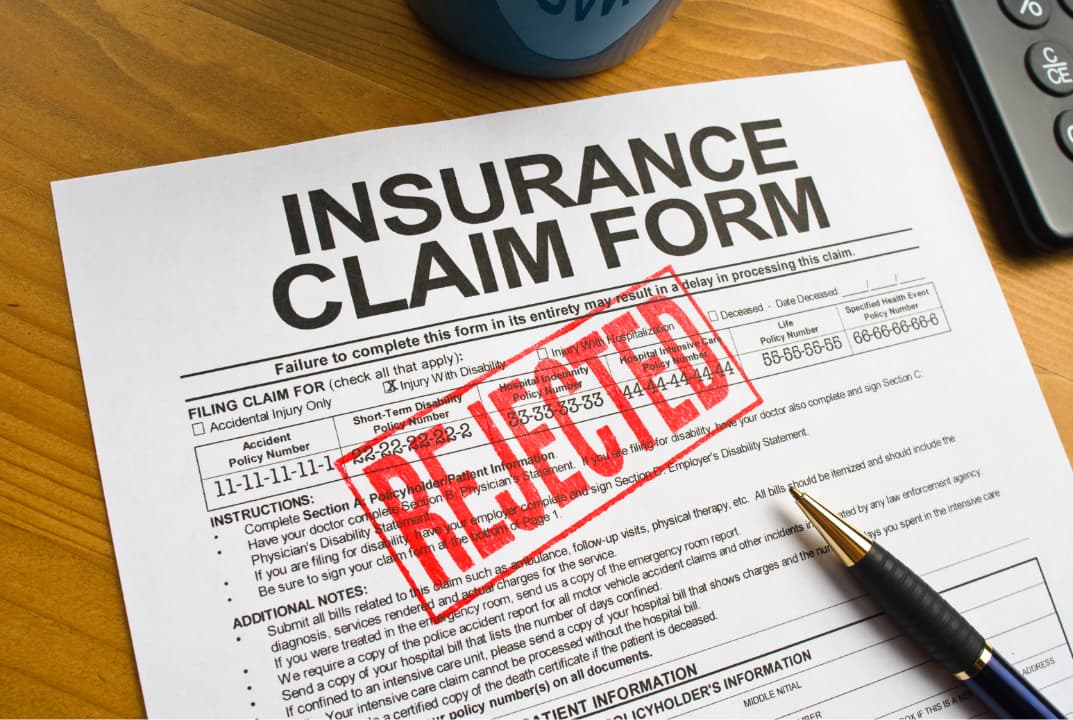
So, you've been told "no" by the car insurance folks. It feels a bit like being rejected from your favorite coffee shop for wearing socks with sandals, doesn't it? But before you start imagining a secret club of perfectly insured drivers judging your every automotive choice, let's take a peek behind the curtain. It's not always about you personally; sometimes, it's just about the numbers playing a game of "keep away" with your policy.
Think of car insurance companies as super-organized, slightly worried parents. They want to make sure everyone in their big, sprawling family is safe and sound, and that means they have to anticipate every little bump and scrape. When they look at your application, they're essentially trying to predict the future, and sometimes, their crystal ball shows a few too many cartoonish "oopsie-daisies."
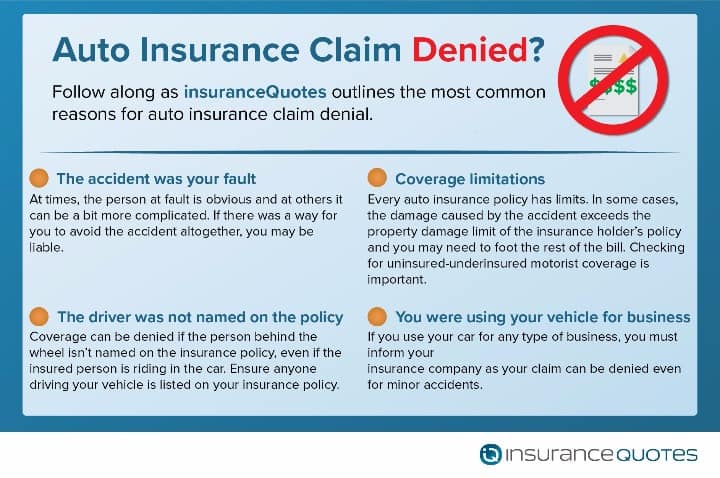
One of the biggest reasons you might get a polite "thanks, but no thanks" is your driving record. This isn't just about that one time you may have slightly exceeded the speed limit on a deserted country road (we've all been there, right?). It's about the overall story your driving tells. A history of tickets, accidents, or even just a lot of claims can make insurers a little… skittish.
Imagine your driving record as a report card. If it's full of A's and B's, insurers are happy to give you a gold star. But if it's got a few too many C's, D's, or even those dreaded F's, they might hesitate. They're worried about how many "detention slips" you might rack up in the future.
Then there's the whole type of car you drive. Some vehicles are like little sports cars with a knack for finding trouble. Others are more like sturdy, sensible shoes that know how to stay out of puddles. Insurers look at things like how often a certain model is stolen, how expensive its parts are, or how likely it is to get into a fender bender. They have fancy charts for this, probably powered by tiny, caffeine-addicted hamsters.
So, if you're driving a flashy, high-performance machine that screams "look at me!" it might come with a higher premium. On the flip side, a reliable, older sedan might be seen as a quiet neighbor who never causes a fuss. It’s not about judging your taste; it's about understanding the potential for spontaneous combustion (or just, you know, a flat tire).
Let's talk about where you live. Believe it or not, your zip code can sometimes play a role. Think of it like this: certain neighborhoods have more car-related excitement. Maybe there are more narrow streets, more opportunities for rogue shopping carts to attack, or perhaps a higher concentration of particularly enthusiastic squirrels with a death wish. Insurers look at historical data for those areas.
It's not that they think you're personally going to engage in a high-speed chase down Main Street. It's more about the general "vibe" of the area. If your neighborhood has a reputation for being a bit wild when it comes to cars, insurers might feel a little more anxious. They might even start practicing their defensive driving moves just thinking about it.
Your age and experience are also big players. Remember when you first got your license, and your parents probably went grey overnight? Insurers have a similar, albeit less dramatic, reaction. Newer drivers, especially younger ones, statistically tend to have more accidents. It’s not a personal insult; it’s just a matter of actuarial science, which sounds way more exciting than it actually is.
They’re basically saying, "You're new to this driving thing, and while we're sure you're a brilliant human being, the road can be a tricky place for novices." It’s like handing the keys to a toddler with a crayon – potential for greatness, but also a high chance of artistic (and automotive) chaos.
Sometimes, it’s the frequency of your claims that raises a flag. If you've had a few too many "incidents" that required you to call your insurance company, they might start to see you as a recurring character in their accident-themed soap opera. They might wonder if your car has a magnet for minor mishaps.
It’s not that they don’t want to help you out when things go wrong. It’s more like they’re looking at their budget and thinking, "Hmm, this particular policyholder seems to be a bit of a frequent flyer in the 'oops, I did it again' department." They want to keep their own financial ship sailing smoothly.
Then there's the mysterious world of credit score. Now, this might sound completely unrelated to your ability to parallel park, but in many places, insurers use credit-based insurance scores. The theory is that people who manage their finances well also tend to be more responsible drivers. It’s a bit of a leap, but that’s how the numbers game plays out sometimes.
So, if your credit score is a bit of a roller coaster, it might affect your insurance application. It's like saying, "If you can balance your checkbook, you can probably balance your car on the road." A slightly odd connection, but hey, that's the way the cookie crumbles (or doesn't, if you can't afford the cookie).
Modifications to your vehicle can also be a sticking point. Did you install a spoiler that looks like it could take flight? Or perhaps an extra-loud muffler that announces your arrival from three blocks away? Insurers see these as potential indicators of a more… spirited driving style. They might also increase the cost of repairs if something goes wrong.
It’s not that they hate fun. It's more that they're worried about what that fancy new turbocharger might do to your average speed. They're envisioning less "Sunday drive" and more "unscheduled track day."
And let's not forget the ever-important type of insurance coverage you're asking for. If you're going for the "everything but the kitchen sink" package, and your driving record is less than stellar, insurers might get a little nervous. They’re basically seeing a high-stakes bet and aren't sure you've got the winning hand.
They might offer you a more basic plan, like offering a smaller portion of cake because they’re not sure you can handle the whole thing without making a mess. It’s about finding a balance that works for everyone, even if it means you don’t get exactly what you initially dreamed of.
So, why are you being refused car insurance? It’s a complex recipe of numbers, past behavior, and a dash of risk assessment. It's not a personal vendetta; it's more like a quirky, data-driven matchmaking service that’s very, very cautious. Don't despair! Sometimes, a little patience and a bit of homework on your end can go a long way in convincing these insurers that you're the perfect driving partner for them.
Think of it as a challenge. You’ve been given a quest: to prove you're a responsible, safe driver who deserves their protection. And who knows, by the end of it, you might even learn a thing or two about yourself and your driving habits. Maybe you’ll discover you’re not the speed demon you thought you were, or that your car is actually a lot cooler than you realized. It's all part of the grand adventure of owning and driving a car!