
What Wrist Should A Man Wear A Watch

Alright, gather ‘round, you magnificent creatures of the male persuasion. We’re about to dive headfirst into a question that has baffled philosophers, vexed fashionistas, and probably caused a few awkward glances at fancy cocktail parties: which wrist should a man wear a watch on? It’s a sartorial minefield, a horological hurdle, and frankly, sometimes feels like trying to assemble IKEA furniture with a blindfold and only one hand. But fear not, for I, your humble café confidante, am here to spill the tea, or rather, the watch oil.
Now, before you start imagining ancient scrolls and secret societies whispering about wrist allegiance, let’s get one thing straight: there’s no one size fits all answer carved into a solid gold sundial. But there are definitely some universally accepted, dare I say, scientifically sound (okay, maybe not scientifically, but definitely practically) reasons and traditions that have shaped our wrist-wearing destiny.
The Dominant Hand Dilemma: A Tale of Two Wrists
Let’s start with the most obvious, the one that’s probably already screaming at you from the depths of your brain: your dominant hand. For the vast majority of us right-handed folks, this means the left wrist is the designated watch zone. Why? Think about it. If you're right-handed, you do most of your writing, eating, high-fiving, and general world-dominating with your right hand. Now, imagine a chunky chronograph or a delicate dress watch constantly getting in the way of your masterpiece grocery list or your epic air guitar solo. Annoying, right?
So, the logic goes: put the watch on the non-dominant wrist. This way, your dominant hand remains free and unencumbered, ready to tackle whatever life throws at it. It’s like giving your dominant hand a little bit of personal space, a buffer zone if you will, from the ticking timekeeper. Plus, when you need to check the time, you can effortlessly flick your wrist, like a seasoned magician revealing a well-timed rabbit. Poof! Time revealed!
What about our left-handed brethren? Well, for you rebels and left-brain thinkers, the same logic applies, just flipped. If your left hand is your go-to for all things awesome, then your right wrist becomes the prime real estate for your timepiece. It's all about minimizing obstruction and maximizing efficiency. It’s the watch equivalent of an ergonomic keyboard, designed for peak performance. Or at least, less accidental button-pressing when you’re trying to swat a fly.

The Crown Conundrum: A Detail Worth Gripping
Now, let's get a little more technical, shall we? Have you ever noticed that little knob on the side of your watch? That, my friends, is called the crown, and its placement is a subtle but significant clue. On most watches, the crown is positioned on the right side of the watch case. Why? Because it's generally easier for a right-handed person to reach over and wind their watch or adjust the time with their right hand if the crown is on the right.
So, if you’re wearing your watch on your left wrist (the dominant hand scenario), the crown will naturally sit on the right side of the watch face, perfectly positioned for a quick tweak. Conversely, if you’re a left-handed watch-wearer sporting your timepiece on your right wrist, the crown will likely be on the left side of the watch case. Again, it’s all about that effortless interaction with your mechanical marvel. It’s the watch saying, “Hey, I’m here to help, and I’ve made it easy for you.”
The "But What If..." Scenarios: When Tradition Takes a Holiday
Okay, okay, I hear you. "But what if I'm a lefty who prefers the watch on my left wrist?" Or, "What if I just like the look of it on my right?" Excellent questions! And the answer, my friends, is simple: you do you!

While the dominant wrist convention is prevalent, it's by no means a hard and fast rule. There are plenty of men who wear their watches on their non-dominant wrist. Perhaps they find it more comfortable, perhaps they just like the aesthetic, or perhaps they have a very specific reason, like a stubborn smartwatch that insists on being touched with the dominant hand for some nefarious tech reason. We’ve all been there, right? Battling with a device that has a mind of its own.
One surprising statistic I unearthed (while procrastinating on writing this article, naturally) is that a small but significant percentage of left-handed individuals actually wear their watches on their left wrist. It’s a testament to the fact that personal preference trumps all. It's like choosing your favorite flavor of ice cream – there's no wrong answer, only what makes your taste buds (or your wrist) happy.
There's also the practical consideration of certain activities. If you're a musician who plays a particular instrument that might get snagged by a watch on your dominant wrist, you might opt for the other side. Or if you’re a carpenter who’s constantly gripping tools, the watch might just get in the way. In these cases, the functionality of the watch-wearing dictates the wrist of choice. It’s less about fashion, more about not losing a finger. A pretty important distinction, I’d say.
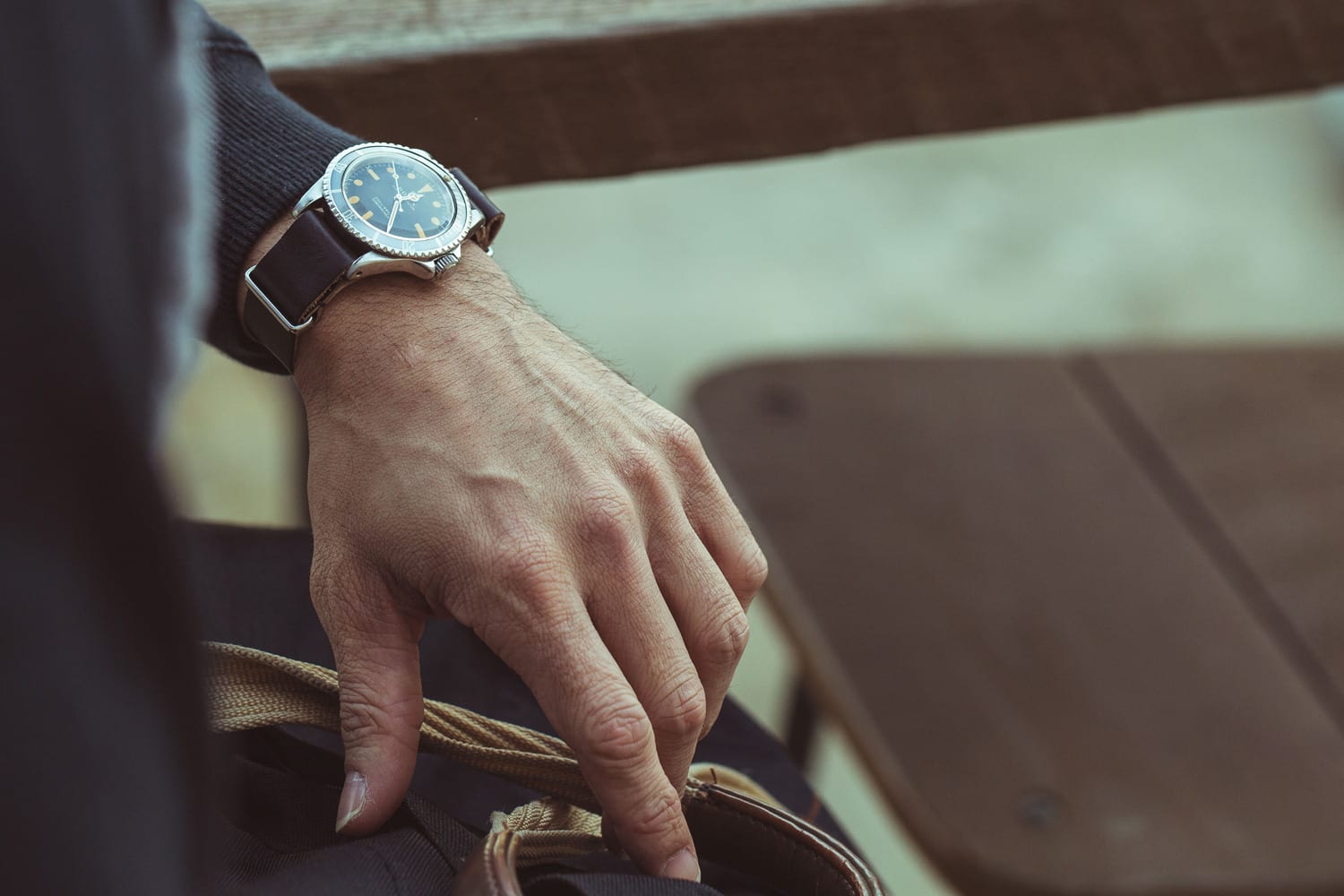
Beyond the Dominant Hand: The "Why" Behind the Choice
Let’s delve a little deeper into the psychology of wrist selection. Some theories suggest that wearing a watch on the non-dominant wrist is an unconscious act of protecting the timepiece. Your dominant hand is the one doing all the heavy lifting, the gesturing, the potential for accidental bumps and scrapes. By placing the watch on the less active wrist, you’re essentially putting it in a slightly safer zone. It’s like giving your watch a VIP lounge on your less-employed limb.
And then there’s the sheer habit. For many, it’s simply what they’ve always done, passed down from father to son, or perhaps picked up as a childhood habit. It's the comfort of the familiar, the sartorial equivalent of your favorite armchair. You don't question it; you just know it feels right.
Another interesting, albeit less common, perspective is that some people wear their watches on their dominant wrist for the simple reason of being able to check the time more discreetly. Imagine you're in a stuffy meeting, trying to sneak a peek at the clock without drawing attention. If the watch is on your dominant wrist, a quick, subtle flick of the wrist might be less conspicuous than reaching across your body.

The Final Ticking Verdict: Confidence is Key
So, after all this deep pondering and mild jesting, what’s the definitive answer? The truth is, the best wrist for a man to wear a watch on is the one that feels most comfortable and natural to him. If you’re right-handed and wear it on your right wrist, and it feels absolutely fantastic, then who am I to judge? You’re rocking it, and that’s what matters.
Think of it like this: if someone tells you you're wearing your socks on the wrong feet, but you're perfectly happy and they're keeping your toes warm, do you really care what they think? Probably not. The same applies to your watch. It’s a personal accessory, an extension of your style, and ultimately, a tool to tell you when it's time for that second cup of coffee.
So, go forth, my friends! Experiment. Try both wrists. See what feels right. The world of watches is vast and wonderful, and the way you wear yours is just another chapter in your personal style story. Just remember, a watch is meant to enhance your life, not complicate it. Unless, of course, you’re into that sort of thing. In which case, have fun with your left-wristed, right-handed, crown-on-the-bottom, avant-garde timekeeping. We salute your bravery.