
What To Say When Someone Dies Muslim

So, a sad thing has happened. Someone we know, or someone close to someone we know, has passed away. It's never a fun situation. And when it's our Muslim friends or neighbors, things can feel a little extra… delicate.
Let's be honest, sometimes we freeze up. We want to say the right thing. But our brains go blank. We worry about offending or saying something totally out of place. It's like walking on eggshells, right?
And the classic "I'm so sorry for your loss" can feel a bit… worn out. Like a favorite pair of jeans, it’s comfortable, but sometimes you want something a little fresher. Especially when you’re trying to connect with someone from a different background.
Now, if you’re Muslim, you’ve probably got a whole arsenal of beautiful phrases. Phrases that are steeped in faith and comfort. Phrases like "Inna lillahi wa inna ilayhi raji'un". This is a big one. It means "Verily we belong to Allah, and verily to Him do we return." It’s powerful stuff. It acknowledges the ultimate truth. It’s a reminder that this life is temporary.
Another gem is "Allah yarhamhu" (for a male) or "Allah yarhamha" (for a female). This translates to "May Allah have mercy on him/her." It’s a simple prayer. It’s heartfelt. It’s a genuine wish for peace for the departed.
Then there’s "Sabr". This means patience. It’s a reminder to the grieving family to remain steadfast. It’s about finding strength in their faith. It’s not saying "Get over it," but rather "Endure with strength."
What about the people who aren't Muslim? This is where the fun (and sometimes the awkwardness) really kicks in. We’re not expected to know all the Arabic phrases. Our goal isn't to suddenly become Islamic scholars overnight. Our goal is to be kind. Our goal is to be supportive.
So, what can you say? My unpopular opinion? Sometimes, the simplest things are the most profound. Think about it. What do we really want when we're hurting? We want to feel seen. We want to feel heard. We want to know someone cares.

You don't need to sprinkle your sentences with foreign words you’re not sure how to pronounce. Unless you're confident, of course! But if you're not, it’s okay to stick to what feels natural to you. The sincerity is what matters most.
Consider this: "I was so sad to hear about [Name of the deceased]. They were such a [positive quality, e.g., kind, funny, lovely] person." This is a great starting point. It acknowledges their existence. It celebrates their life.
You can also add, "I'm thinking of you and your family during this difficult time." This is universally understood. It expresses your empathy. It's a gentle, comforting embrace in words.
What about a personal memory? If you knew the deceased, sharing a positive anecdote can be incredibly comforting. Something like, "I'll always remember when [Name of deceased] [shared a funny story or did a kind deed]." It brings a smile through tears. It keeps their spirit alive.
Sometimes, people offer practical help. "Please let me know if there's anything at all I can do." This is good, but it can put the burden on the grieving person to think of something. It’s better to be specific if you can.
So, try this: "I'd like to bring over some food on [day]. Would that be okay?" Or, "Can I help with school runs for your kids this week?" Specific offers are much easier to accept. They show genuine willingness to help.
Now, back to the Muslim context. Is there anything you should specifically avoid? Generally, avoid platitudes that minimize their grief. Things like "They're in a better place" can be tricky. While true for believers, the bereaved might not be ready to hear it yet.
Also, resist the urge to pry for details about the death. Unless they volunteer the information, it's best to let them share what they are comfortable with. Respect their privacy.
What about a gentle nod to their faith? If you're not sure, it's okay to err on the side of caution. But if you know they are devout, a simple "May Allah grant them peace" or "May Allah reward them for their good deeds" can be very meaningful.
Here’s a thought: What if you do know a Muslim phrase? And you want to use it? Absolutely go for it! It shows you’ve made an effort. It shows you respect their traditions. Just make sure you’ve got the pronunciation reasonably right. A little effort goes a long way.
My personal favorite, which works across cultures, is simply expressing your sorrow and offering support. "I’m so deeply sorry for your loss. Please know I’m here for you." It’s the sincerity that shines through. It's the human connection.
Think about it. When your own loved one passed, what did you need? You needed people. You needed kindness. You needed to feel less alone. That's universal.
So, if your Muslim friend’s parent passes, you can say, "I am so incredibly sorry to hear about your mother. She was a wonderful woman. I am sending you and your family all my love and support." It's direct. It's honest. It's loving.
Or perhaps, "I can't imagine what you're going through right now. Please take care of yourself. If you need anything, anything at all, please don't hesitate to reach out." This acknowledges the pain without trying to fix it. It offers a lifeline.
What if you're at a mosque or a gathering? You might hear a lot of Arabic. Don't feel pressured to join in if you don't know what to say. A nod, a gentle hand on the arm (if appropriate), or a quiet "May God bless them" can suffice.
Let’s revisit "Inna lillahi wa inna ilayhi raji'un". If you want to say this, and you're not Muslim, it's a beautiful sentiment. It's a profound acknowledgment of faith. It shows you understand a core tenet of Islam.
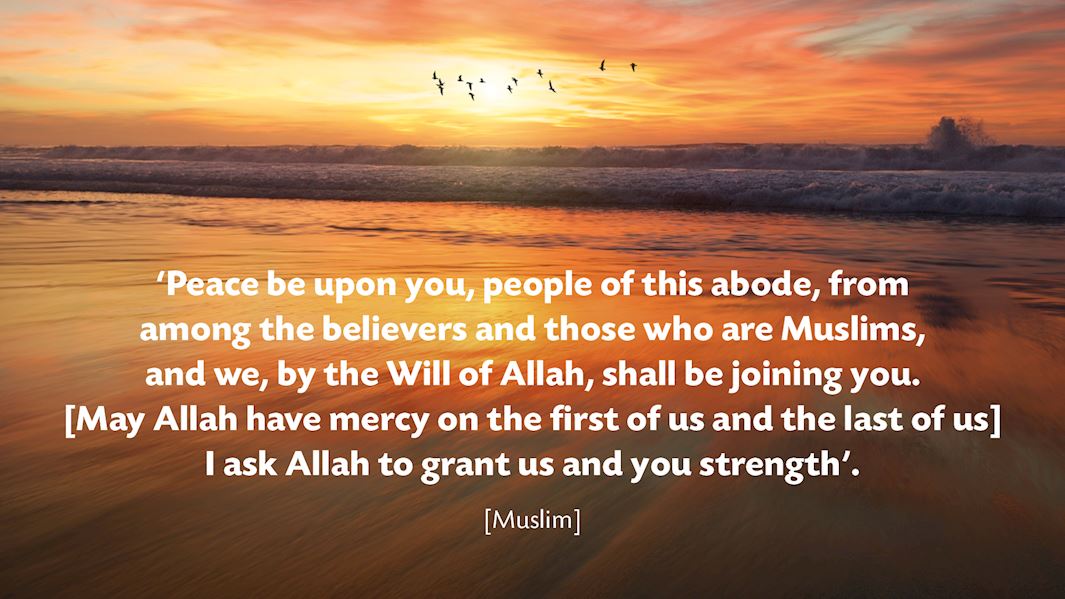
Or "Allah yerhamha/hu". A simple, genuine prayer from your heart can be incredibly touching. It doesn't matter if you're not Muslim; the intention behind the prayer is what counts.
Ultimately, the best thing you can say is something that comes from your heart. Something that acknowledges the gravity of the situation. Something that expresses your genuine care and concern.
Forget the script. Forget the pressure to be perfect. Just be human. Be kind. Be present for your friends, whether they are Muslim or not.
A simple, heartfelt sentence can carry more weight than a perfectly recited Quranic verse you don’t fully understand. The empathy is the key. The support is the anchor.
So, the next time this sad situation arises, take a deep breath. Remember the person who passed. Remember the person who is grieving. And speak from your heart. It’s truly the only language that never fails.