
What Paint Can You Use On Upvc Doors

Right, so picture this: you've finally decided to give your humble abode a bit of a glow-up. You've tackled the wonky bookshelf, wrestled the garden gnomes into submission, and now your eyes land on… the UPVC door. Ah, the trusty UPVC door. It’s seen better days, hasn’t it? Maybe it’s gone a bit… beige. Or worse, that shade of faded grey that screams "I’ve been staring at the sun since the dawn of time." You think, "I know! I’ll paint it!"
And that, my friends, is where the adventure truly begins. Because slapping any old paint from the shed onto your UPVC door is about as effective as trying to reason with a pigeon trying to steal your chips. It’s a recipe for… well, let’s just say it involves flaking, peeling, and a general air of disappointment. So, what mystical potions, I mean, paints, can we actually use on this plastic marvel?
The Great UPVC Paint Mystery: Unraveling the Enigma!
For ages, the general consensus was: "Don't even think about it!" UPVC, you see, is like that friend who’s super resistant to change. It’s smooth, it’s a bit slippery, and most paints just slide right off like a greased otter on a waterslide. But fear not, intrepid decorator! The world of DIY has evolved, and so have the paints. We're not living in the dark ages anymore, people!
Think of it like trying to stick a Post-it note to a freshly polished car. It’s going to fall off, right? UPVC is a bit like that car. It needs a special kind of adhesive magic. And thankfully, that magic now exists in a can.
So, What's the Secret Sauce?
The key to painting UPVC doors successfully lies in two main things: specialized primers and suitable topcoats. It’s not just about slapping on a lick of paint; it’s about building a tiny, colourful empire on that plastic surface. And like any good empire, it needs a strong foundation.
You can’t just grab a tub of "Magnolia Dream" from the local hardware store and expect miracles. Unless your miracle is watching paint peel off in dramatic, artistic swirls. Which, to be fair, could be a statement piece, but probably not the one you’re going for.
The All-Important Primer: The Unsung Hero
Let’s talk about primers. These little wizards are the foundation of your UPVC painting dreams. They’re the ones who get down and dirty, creating a surface that the topcoat can actually grip. Without a good primer, your paint job will be as fleeting as a politician’s promise.
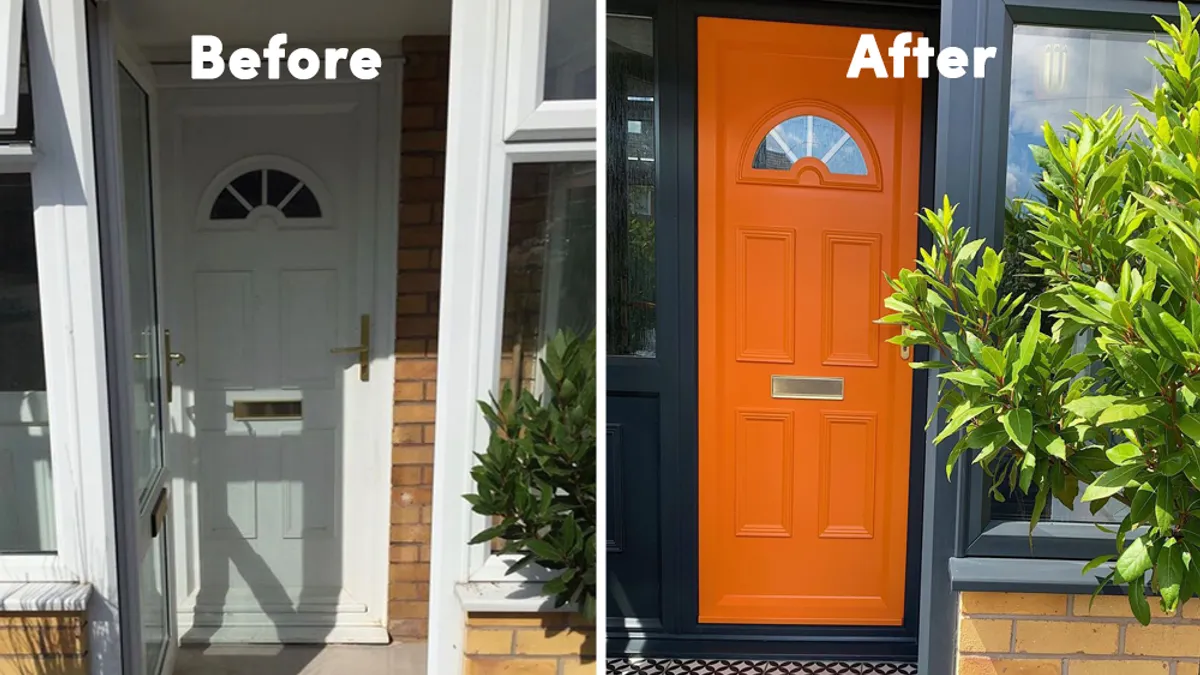
You need a specific UPVC primer, or a plastic primer. These are formulated to bond with plastic surfaces, creating that essential grip. Imagine trying to tie your shoelaces with oven mitts on – that’s what regular paint is up against on UPVC. The right primer is like taking the oven mitts off and suddenly being able to tie a perfect bow.
Some people try to skip this step. Oh, the bravery! The sheer, unadulterated optimism! It’s like building a house without a foundation. You might get a few walls up, but the first strong gust of wind (or a particularly enthusiastic toddler) will send the whole thing tumbling down. Trust me, the primer is your best friend in this scenario. It’s the unsung hero, the quiet achiever. It deserves a medal. Or at least a really good cup of tea.
What to Look For in a Primer: The Nitty-Gritty
When you’re shopping, look for labels that explicitly state "for plastics," "for UPVC," or "adhesion primer for difficult surfaces." You’ll find these at good paint stores. They might be a little pricier than your average primer, but think of it as an investment in a job that won't require redoing next Tuesday. It’s the difference between a fleeting fad and a lasting masterpiece. Your door will thank you. Probably with a subtle nod, but it’s the thought that counts.
Some primers are water-based, others are solvent-based. For UPVC, you generally want something that’s designed for good adhesion. Read the tin! It’s your instruction manual to a paint job that won’t make you cry.

The Topcoat: Making it Pretty (and Durable!)
Once your primer has done its magical bonding work, it’s time for the main event: the topcoat. Now, here’s where things get really interesting. You can’t just use any old interior emulsion. Your UPVC door lives outside, you know. It braves the elements. It gets rained on. It gets sun-baked. It might even get subjected to the occasional rogue football. It needs a paint that can handle the drama.
So, what kind of paint can stand up to such a rigorous lifestyle? We're talking about specialized plastic paints or exterior-grade paints that are known for their excellent adhesion and durability.
Imagine your door is an actor auditioning for a tough role. It needs to be resilient, flexible, and look good under pressure. Your average interior paint is like an actor who faints at the first sign of a stage light. Not ideal.
The Champions of Colour: What to Choose
The most popular and effective choice for UPVC doors is often an acrylic-based paint or a water-based enamel. These tend to be more flexible than oil-based paints, which is crucial because UPVC can expand and contract slightly with temperature changes. A rigid paint would just crack under the pressure, like a teenager forced to clean their room.
Some brands have even developed paints specifically for UPVC, which are often a doddle to use because they combine the priming and topcoat properties into one. These are like the all-in-one cleaning solutions that promise the world. And sometimes, they actually deliver!

You'll also want an exterior-grade paint. This means it's designed to withstand UV rays (so your vibrant red doesn't fade to a sad pink overnight), moisture, and general wear and tear. Think of it as giving your door a superhero cape. It’s ready for anything.
The Preparation Phase: Don't Be Lazy!
Okay, I know. Prep work. It sounds about as exciting as watching paint dry. But here’s the thing: proper preparation is 90% of the success. The other 10% is sheer willpower and maybe a strong cup of coffee.
You need to clean your UPVC door thoroughly. And I mean thoroughly. Use a good degreaser or a mild detergent. Get rid of all the grime, the mildew, the ghostly fingerprints of previous occupants. A dirty surface is like trying to stick glitter to a greasy chip. It just won't adhere properly. You want a squeaky-clean surface, so clean it until it’s practically shining with embarrassment.
Then, you might need to give it a light sanding, especially if the UPVC is particularly glossy. This isn't about creating a whole new texture; it's just about scuffing it up a tiny bit to give the primer something to cling to. Think of it as a gentle handshake, not a wrestling match. A fine-grit sandpaper (around 240-grit) is your friend here. And then, of course, wipe away all that dust. You don't want your lovely new paint job to be speckled with UPVC dust bunnies.

Masking tape is also your best mate. Protect those windows, that brickwork, that perfectly manicured petunias. You don't want to be the person who ends up with a blue door and a pink window frame, unless that's your avant-garde aesthetic.
The Painting Process: Brush it Like You Mean It!
Once prepped and primed, you can start painting. Apply your primer in thin, even coats. Don’t try to get it all done in one go; that’s a classic rookie mistake. Multiple thin coats are always better than one thick, gloopy one. It’s like layering a delicious cake – each layer counts.
Then, apply your topcoat in the same fashion. Again, thin, even coats. You might need two or three coats of your chosen colour for full, opaque coverage. Let each coat dry completely according to the manufacturer’s instructions. Patience, grasshopper!
Use a good quality brush or roller designed for the type of paint you’re using. A fluffy roller can give a nice smooth finish, while a good brush is essential for those tricky corners and edges. And for goodness sake, work in consistent strokes. Unless you're going for a Jackson Pollock-esque masterpiece, which, again, is a bold choice.
So, there you have it! Painting UPVC doors isn't some impossible feat reserved for paint-wizards and sorcerers. With the right preparation, the right primer, and the right topcoat, you can transform that tired old door into a statement piece. It’s a bit of effort, sure, but the satisfaction of a job well done, and a door that looks utterly fabulous, is absolutely worth it. Now go forth and paint!