
What Is The Order Of Belts In Karate
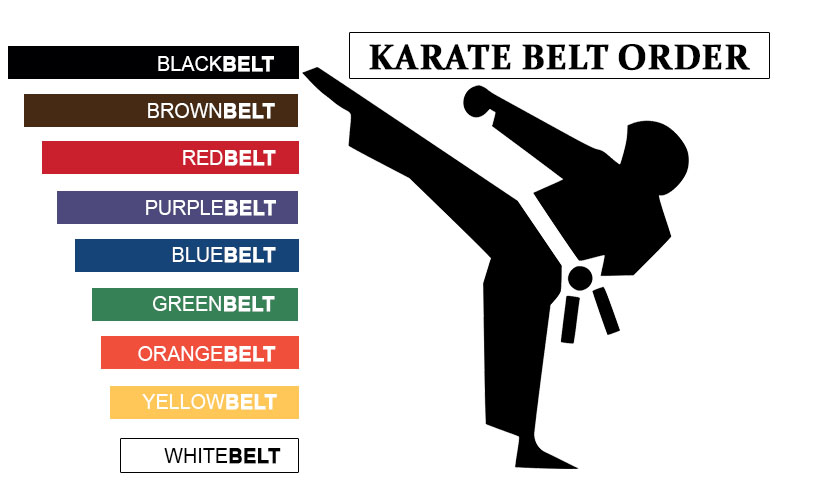
Ever watched a karate movie or seen practitioners with their colorful sashes and wondered what it's all about? The order of belts in karate is a fascinating journey, a visual representation of progress that's both inspiring and incredibly satisfying. It’s like a skill tree for martial arts, showing how far you’ve come and how much more there is to explore. Whether you're considering taking up the sport yourself, cheering on a family member, or just curious about this ancient discipline, understanding the belt system makes the whole experience more engaging and rewarding.
For absolute beginners, the belt system provides a clear roadmap. You start with a white belt, symbolizing a clean slate and an open mind. As you learn and grow, you earn new belts, each signifying a new level of understanding and a deepening of your skills. This visual feedback is a huge motivator, helping you stay focused and celebrate your achievements. For families, karate can be a fantastic shared activity. Parents and children can train together, learn respect, discipline, and self-defense, all while working towards common goals and supporting each other's progress through the belt ranks. It’s a wonderful way to bond and build confidence as a unit. For dedicated hobbyists, the belt progression offers a structured challenge, pushing you to constantly improve and refine your technique. It’s not just about kicks and punches; it’s about developing mental fortitude, patience, and a deeper appreciation for the art.
Generally, the belt system starts with the white belt, representing innocence and the beginning of the journey. Moving up, you'll encounter colors like yellow, orange, green, and blue, often called "kyu" grades, which are for students. Each color signifies a different stage of learning, from basic stances and strikes to more complex techniques and combinations. After these student ranks, you reach the "dan" grades, typically starting with black belt. This is a significant milestone, indicating a level of mastery and responsibility. While the exact order and colors can vary slightly between different karate styles and dojos (schools), the general progression from lighter to darker colors, culminating in black, is quite common. Some styles might even have intermediate belts, like red or purple, adding more nuance to the journey.
Thinking about starting? The best advice is simple: find a reputable dojo. Visit a few, watch a class, and talk to the instructors. Don't be intimidated by the belts you see; everyone starts somewhere! Wear comfortable athletic clothing for your first trial class. Remember, the journey of a thousand miles begins with a single step, or in this case, a single white belt. Be patient with yourself, embrace the learning process, and enjoy the physical and mental benefits that come with it. Consistency is key – showing up regularly and practicing diligently is more important than innate talent.
Ultimately, the order of belts in karate is more than just a ranking system; it's a testament to dedication, perseverance, and the continuous pursuit of self-improvement. It’s a journey that’s both challenging and incredibly rewarding, offering a pathway to discipline, confidence, and a lifelong appreciation for martial arts. The sense of accomplishment with each new belt earned is a powerful feeling, making the entire experience a truly enjoyable and valuable one.