
What Is Surface Area To Volume Ratio
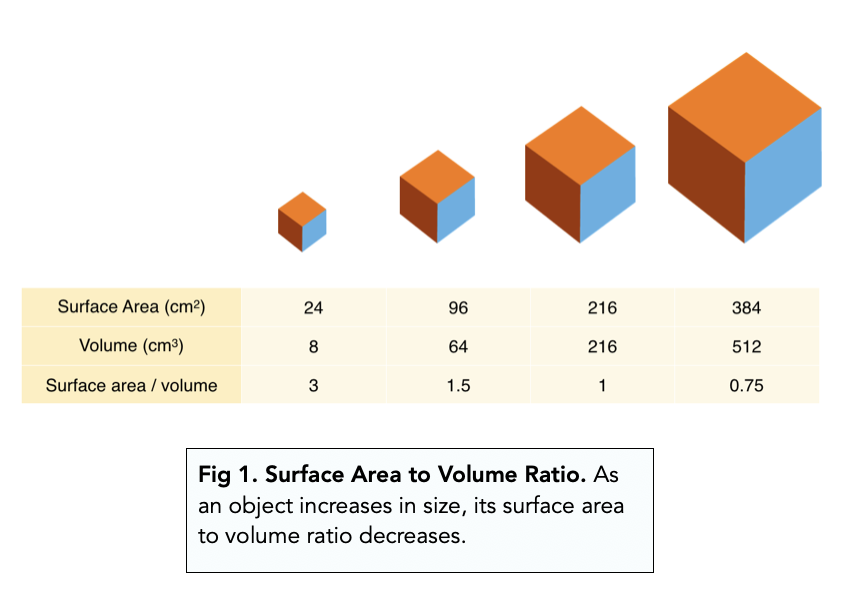
Have you ever looked at a tiny little ant and then a giant elephant and wondered, "What gives?" It’s not just about the sheer size difference, oh no. There's a secret handshake happening between their surfaces and their insides. It’s called the Surface Area to Volume Ratio, and it's way more fun than it sounds.
Think of it like this: your skin is your surface area. Everything inside you, your organs, your blood, your undigested pizza, that’s your volume. They're always in a bit of a tug-of-war.
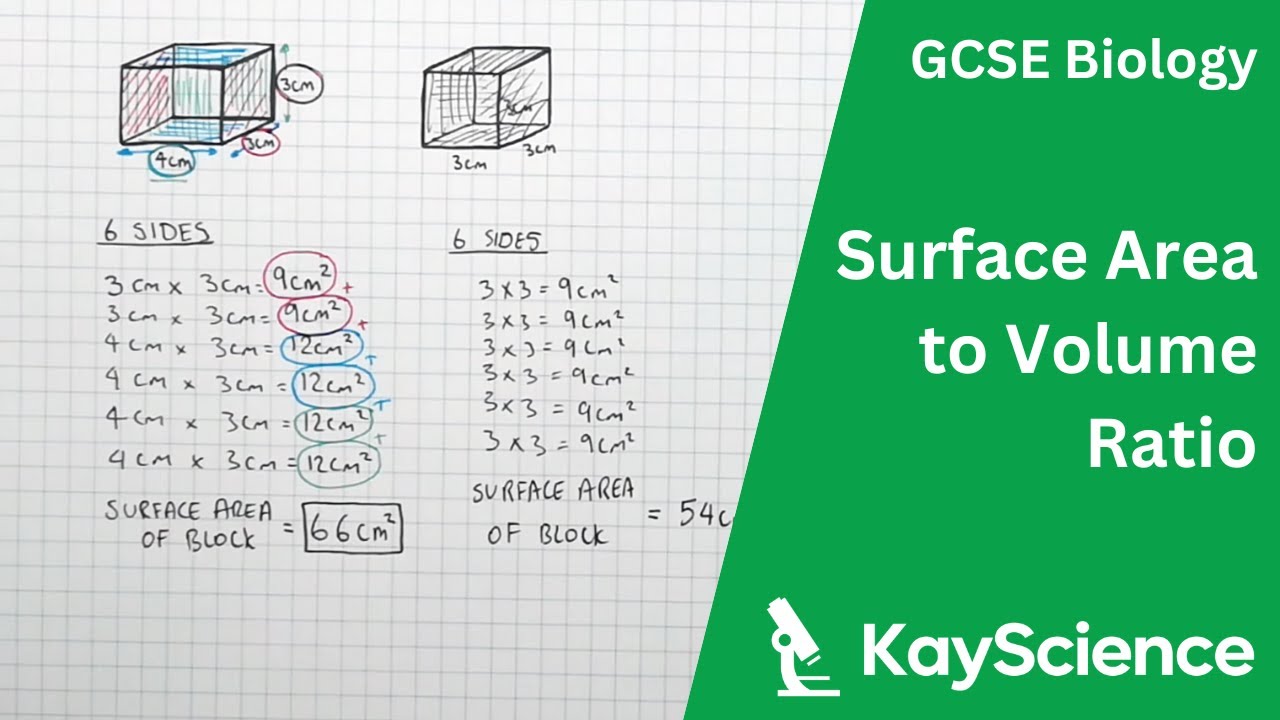
So, what's this ratio all about? Imagine you have a tiny cube of cheese. It has a certain amount of surface area. Now, imagine you take that same amount of cheese and make it into a giant, single block. The surface area compared to its total cheese-volume has changed. It’s a bit of a mathematical magic trick.
The Smaller, The Spicier!
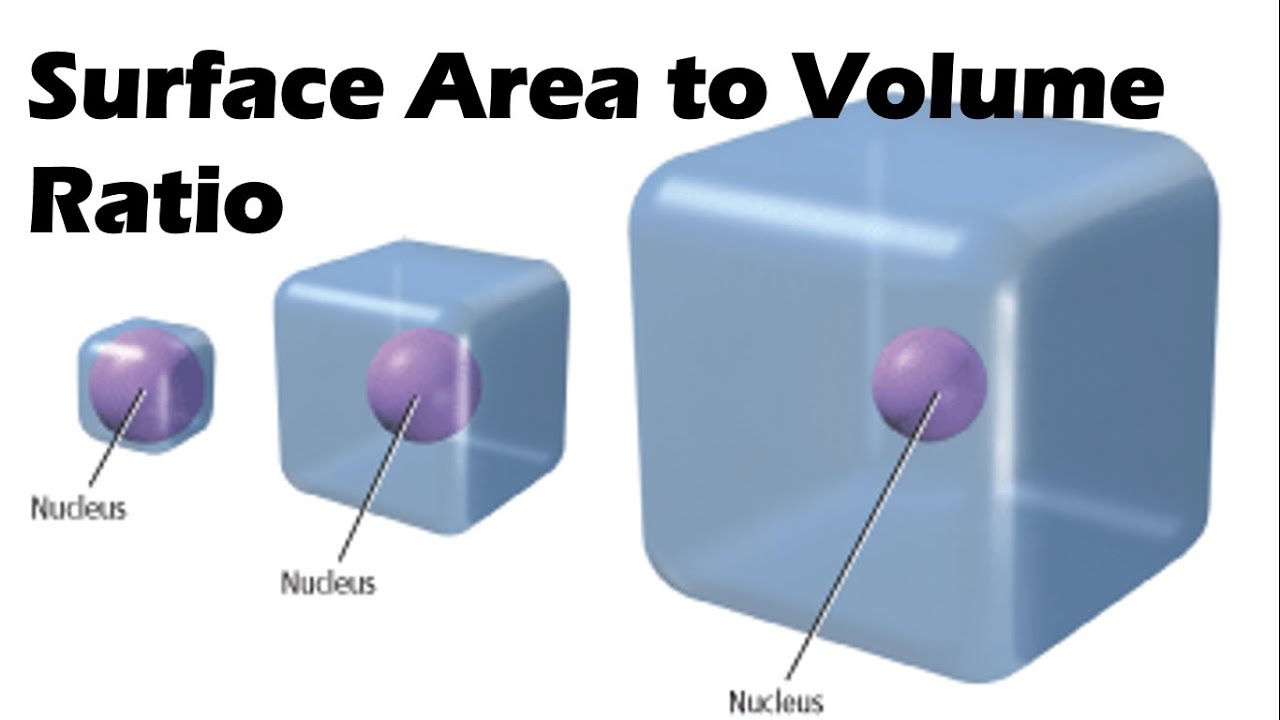
Here's where it gets really interesting, and a little bit of an unpopular opinion of mine. Smaller things tend to have a bigger surface area to volume ratio. Yes, you heard that right. The little guys are packing more surface relative to their bulk.
Think about a single grain of rice versus a whole bag of rice. That individual grain has a lot of surface exposed compared to its tiny starchy self. The bag of rice? A lot of that rice is tucked away, not really "out there" on the surface.
This ratio is why tiny creatures can do amazing things. Like how an ant can lift objects many times its own weight. It's like their surface area is giving them extra grip or leverage. They're all surface, baby!
Now, picture a rhinoceros. That massive beast has a proportionally smaller surface area to its enormous volume. It’s like it’s all just… volume. Not much "outside" to play with.

Why Does This Even Matter?
Well, it matters for pretty much everything alive, and even some things that aren't. For us humans, it’s a big deal. Our lungs, for instance, are masterpieces of surface area. They're all folded and branched like tiny trees.
Why so much folding? Because we need to get oxygen in and carbon dioxide out as efficiently as possible. More surface area means faster gas exchange. It's like having a super-sized express lane for breathing.
Our intestines are similar. They're long and coiled, with little finger-like projections called villi. All that extra nooks and crannies dramatically increase the surface area for absorbing nutrients. So, thank your intestines for that. They're doing their best to give your food maximum exposure.
But what about when things get too big? That’s where the ratio can cause problems. If a creature's volume grows much faster than its surface area, it can run into issues.
Imagine a giant, smooth, perfectly spherical creature. As it gets bigger, its volume increases by the cube of its size, while its surface area only increases by the square. That means the volume starts to outstrip the surface area.

This is why giant land animals need special adaptations. Elephants have big ears to help them radiate heat. Without those big ears, they'd overheat because their surface area wouldn't be enough to cool their massive volume. It’s a constant battle against getting too much inside and not enough outside to manage it.
Cooling Down, Heating Up
The surface area to volume ratio is a big player in how creatures regulate their temperature. Small animals, with their high ratio, lose heat very quickly. That’s why they need to eat a lot to keep their internal furnace burning. Think of a hummingbird. It’s a tiny, feathery rocket that needs to fuel constantly.
Larger animals, with their low ratio, retain heat much better. They’re like little insulation blankets. This can be good in cold climates but can be a problem in hot ones. That’s where those big ears on elephants come in handy. It’s their way of increasing their surface area to shed excess heat.
Even in the plant world, this ratio is at play. Leaves are designed to have a large surface area for capturing sunlight for photosynthesis. But they also have to deal with water loss. It’s a delicate balancing act.
Desert plants often have smaller leaves, or even spines, to reduce water loss. They’re making a trade-off. Less surface means less water evaporation, but also potentially less sunlight. It’s a tough world out there for plants.
The "Unpopular Opinion" Part
Now, here’s my truly unpopular, slightly ridiculous opinion. I think the surface area to volume ratio is nature’s way of playing a cosmic game of "Goldilocks." Not too big, not too small, but just right.
It dictates what can exist and how it exists. It’s the invisible hand that shapes life, from the microscopic to the gargantuan. It’s the reason we have fluffy clouds and not giant, solid water blobs.
Imagine if our brains were the size of Volkswagens but we still had the surface area of a postage stamp. We'd be pretty much useless. We’d have all these thoughts trapped inside with no way to get them out or process the world efficiently.
Conversely, if we were all just skin and no internal organs, well, that would be… less functional. The ratio is key to our very existence and our ability to interact with the world. It’s the silent architect of form and function.
So, next time you see a tiny ladybug or a majestic whale, give a little nod to the Surface Area to Volume Ratio. It’s the unsung hero of biology, the subtle sculptor of life. It’s the reason why size isn't everything, and why sometimes, being small or having a lot of nooks and crannies is a really, really good thing.
It’s a bit like a good hug. You want enough surface contact to feel connected, but not so much that you can’t breathe or move. The ratio is nature’s perfect hug. And who doesn't love a good hug?
So, embrace the ratio. It’s not just math; it’s life. And it’s a lot more interesting than you might think. It’s the secret sauce, the hidden ingredient, the reason why the world looks the way it does.
And sometimes, just sometimes, it makes me want to measure my own ratio. Just to see if I'm truly optimized for world domination or just good for a light snack. It's a thought that keeps me up at night.
The End (of this particular exploration, anyway).