
What Is Near Add On Eye Prescription
Ever found yourself squinting at your phone screen, only to realize the book on your lap is perfectly clear? Or perhaps you've noticed a subtle shift in how you see things up close as the years go by. If so, you've already brushed up against the fascinating world of near add on eye prescriptions, sometimes simply called "add power" or "near addition." It's not some complicated medical jargon to be afraid of; rather, it's a clever adjustment that helps a lot of us see the world more comfortably, especially when we’re focusing on things nearby. Think of it as a little boost for your eyes, designed to make everyday tasks a breeze.
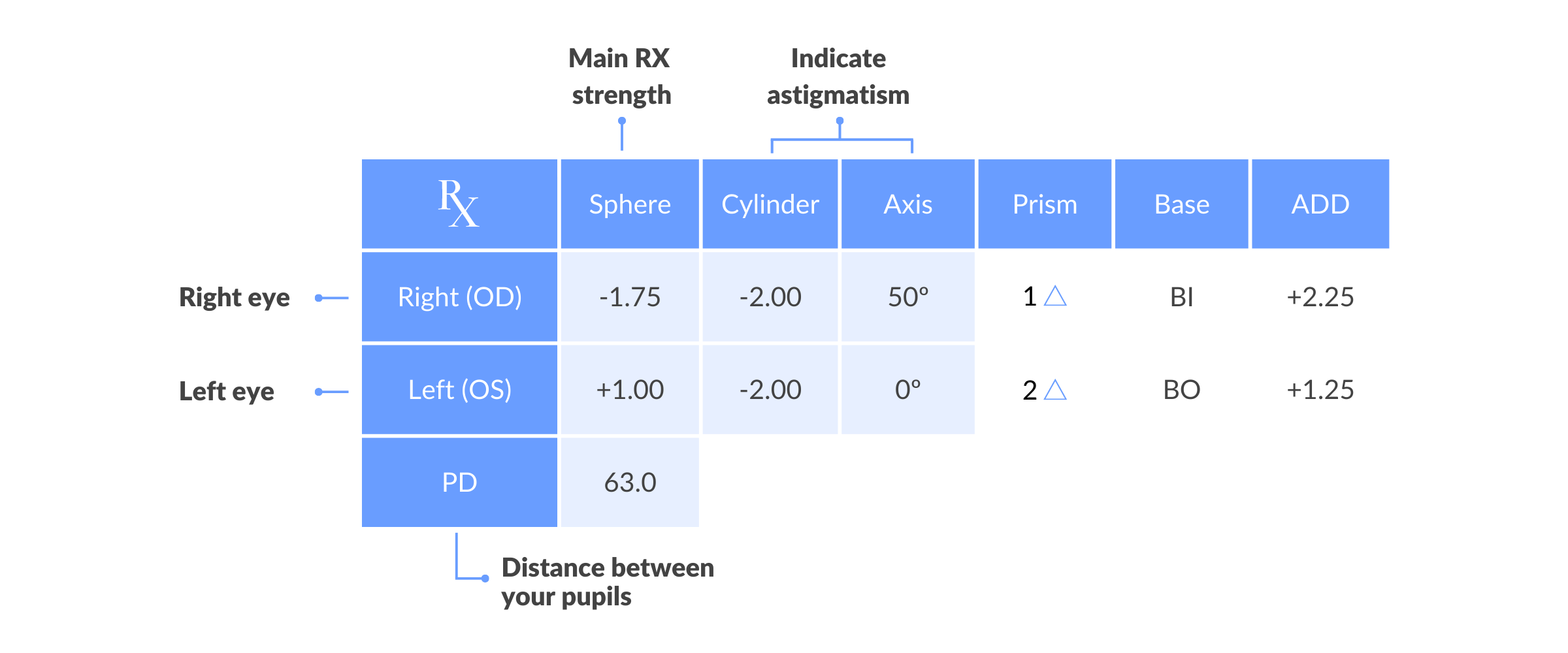
So, what exactly is this "near add on"? In essence, it's a specific prescription that’s added to your regular eyeglasses or contact lenses to correct for presbyopia. Presbyopia is that common, age-related condition where the natural lens in your eye loses its flexibility, making it harder to focus on close-up objects. You might start noticing it in your 40s. The near add on works by adding a little extra magnifying power, allowing your eyes to relax and still achieve sharp focus at reading distances. The benefits are pretty straightforward: reduced eye strain, clearer vision for reading and close work, and ultimately, a more comfortable visual experience. No more holding things at arm's length or feeling that familiar headache after a long day of reading!
Where do we see this "near add on" in action? It's incredibly prevalent in our daily lives. The most common examples are reading glasses, those handy spectacles you grab when deciphering a menu or scrolling through social media. But it goes beyond just standalone reading glasses. Many people use bifocal or progressive lenses in their eyeglasses. Bifocals have a distinct line separating the distance prescription from the near add on, while progressives offer a more seamless transition, allowing for clear vision at all distances – near, intermediate, and far. For contact lens wearers, multifocal contact lenses work on a similar principle, providing both distance clarity and near support within a single lens. These aren't just for the elderly, either; many younger individuals who have undergone certain eye surgeries or have specific vision challenges might also benefit from a near add on.
Curious to explore this further? It's simpler than you might think! If you find yourself struggling with close-up tasks, the first and most important step is to schedule an eye exam with an optometrist or ophthalmologist. They can accurately diagnose presbyopia and determine if a near add on is right for you. You don't need to be afraid to discuss your symptoms; they're there to help! For a low-stakes exploration, consider trying on a pair of over-the-counter reading glasses from a pharmacy. Start with a low magnification (like +1.00 or +1.25) and see if it makes a noticeable difference. This can give you a good idea of how a near add on feels. Experimenting with different reading distances while wearing them can also be insightful. It's all about finding that sweet spot where your eyes feel relaxed and your vision is sharp. Understanding near add on prescriptions isn't about facing an inevitable decline in vision; it's about embracing a practical solution that keeps you seeing your best, up close and personal.