
What Is Grip Size On A Tennis Racket
Hey tennis fans, or even if you're just tennis-curious! Ever found yourself staring at a tennis racket, maybe eyeing one up at the sports shop, and wondering what all those numbers and letters are about? Today, we're going to dive into something super important, something that can actually make a huge difference in how you play and feel on the court, without getting all technical and stuff. We're talking about grip size on a tennis racket.
Now, you might be thinking, "Grip size? Really? Isn't it just... the handle?" Well, yes and no! Think of it like this: have you ever tried on a pair of shoes that are just slightly too big or way too small? It’s not comfortable, right? It throws off your whole stride, and you can't really perform your best. Your tennis racket grip is kind of the same deal for your hands.
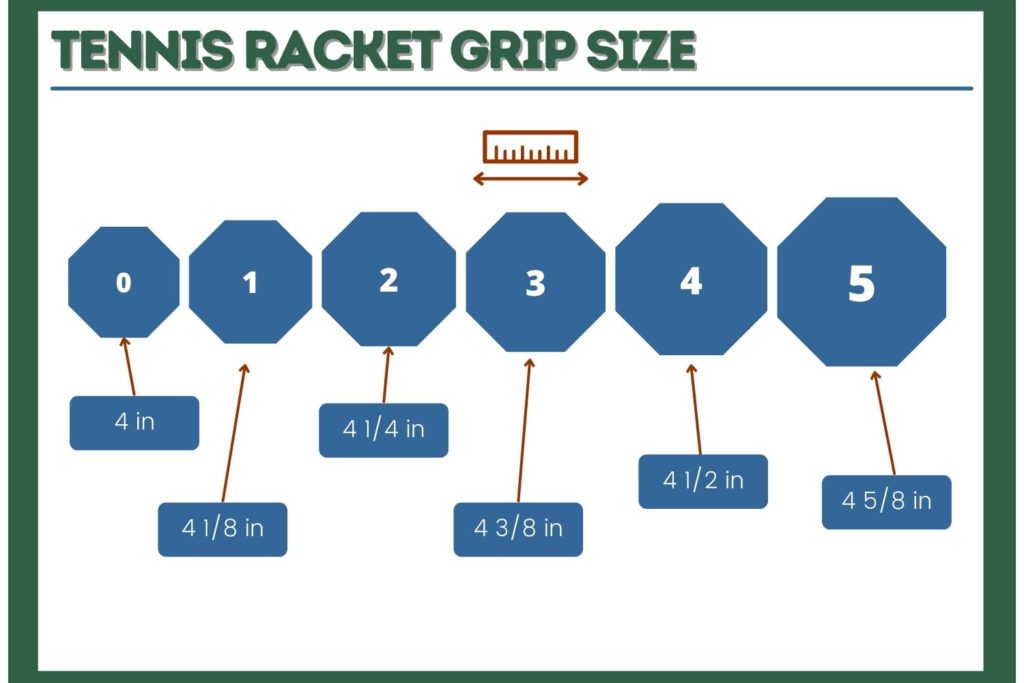
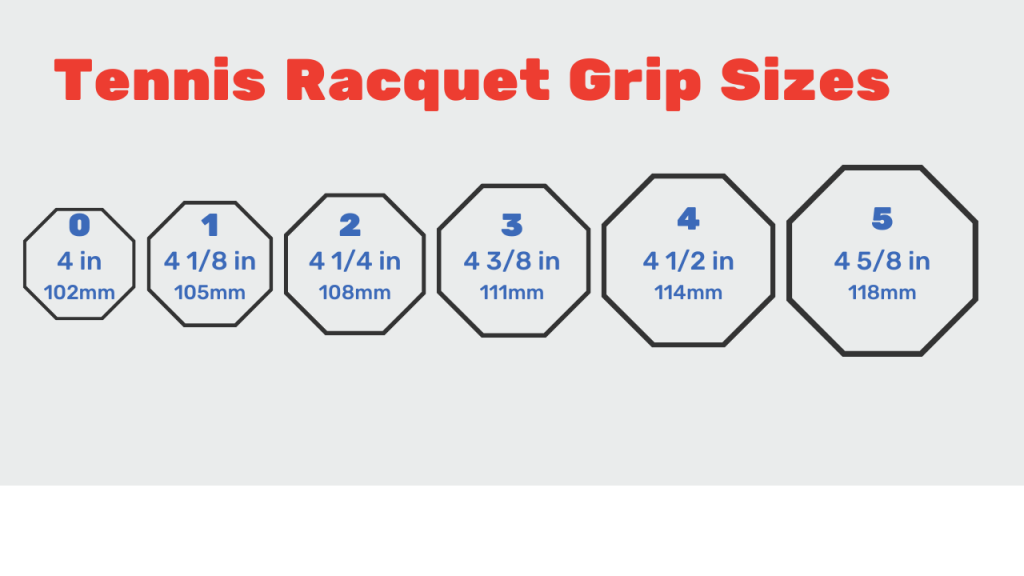
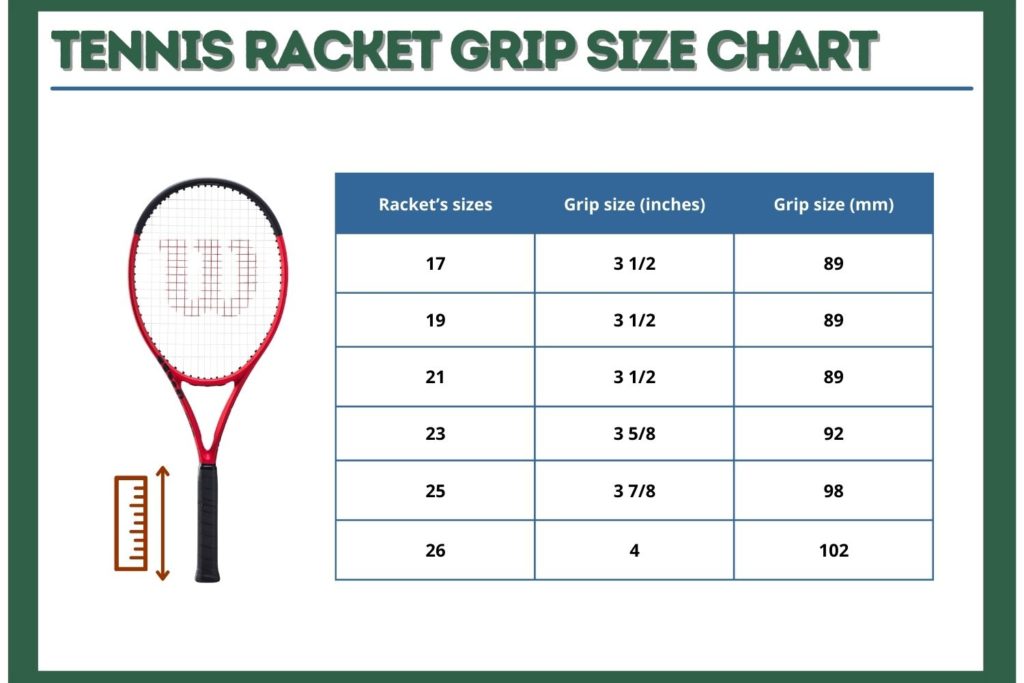
So, what exactly is grip size on a tennis racket? In simple terms, it's the circumference of the handle. It’s how thick or thin the racket feels in your hand when you wrap your fingers around it. Manufacturers measure this, and you'll usually see it represented by a number, like 4 1/8, 4 3/8, 4 1/2, etc. Sometimes you'll also see letters, like L2, L3, L4. These are just different ways of saying the same thing, basically indicating a smaller or larger grip.
Why is this so cool or interesting, you ask? Well, imagine you're a chef. Having the right knife is crucial, right? You wouldn't want a knife that's too clunky to chop finely, or one that's too delicate to handle a tough cut. The grip size on your racket is your direct connection to the tool of your tennis game. It's how you steer, how you power, how you feel the ball.
The "Just Right" Feeling
Finding the perfect grip size for you is like finding that sweet spot on a guitar, or hitting the bullseye on a dartboard. When it's right, it feels effortless. Your hand can relax just enough, allowing your wrist and arm to move freely. This means more control, more power, and frankly, a lot more fun. You won't be fighting your racket; you'll be working with it.

On the flip side, if your grip is too big, what happens? Your fingers have to scrunch up awkwardly to try and close around it. This can lead to a really tense grip, which is a big no-no in tennis. A tense grip can lead to all sorts of problems, like lack of wrist flexibility, which is where a lot of your power and spin come from. It can also feel like you're trying to hold onto a baseball bat that’s a bit too thick for your hands. You might feel like you're losing the racket on powerful shots, or just generally feeling uncomfortable and fatigued much faster.
Now, what if your grip is too small? This is also a recipe for disaster. If the handle is too thin, your hand might tend to over-grip it. You’ll squeeze it extra tight, again leading to that dreaded tension. You might also find your hand rolling over the butt cap of the racket too much, especially on forehand groundstrokes. It's like trying to hold a slippery ice cream cone that's a bit too skinny – you're constantly worried it's going to slip out, so you grip it too hard!
The Science (But Not Too Science-y) Behind It
So, how do you figure out what size you need? It’s not rocket science, but it does involve a little bit of a hands-on approach. The general rule of thumb that most people use is the "finger rule."
Here’s how it works: Take your racket (or any racket, really) and hold it like you're about to hit a forehand. Let your hand rest naturally on the grip. Now, here’s the trick: try to slide your index finger from your other hand in between your fingertips and the heel of your palm. If there’s a nice, comfortable space – not too much, not too little – for that finger to fit, you’re likely in the ballpark of a good grip size.
Think of it like a tailor fitting a suit. You want it snug, but not constricting. You want it to allow for movement and comfort. If your index finger fits in with a little bit of breathing room, that's usually a good sign. If you can barely get your finger in, the grip is probably too big. If you have a huge gap where your finger can wiggle around freely, it's likely too small.
Another way to think about it: Imagine you're playing a video game and you're holding the controller. You want to be able to grip it firmly enough to have control, but not so tightly that your hand starts to cramp after a few minutes. It’s that same sense of comfortable, secure control.
Why It's Super Cool to Get It Right
Getting your grip size right isn't just about avoiding pain; it's about unlocking your potential. When your grip feels natural, your whole kinetic chain – from your toes to your fingertips – can work more efficiently. This means:

- More Power: A relaxed, correct grip allows for maximum racquet head speed.
- Better Control: When you're not fighting your grip, you can focus on precise shot placement.
- Increased Spin: A flexible wrist, facilitated by the right grip, is key for generating topspin and slice.
- Injury Prevention: Avoiding tension in your hand and wrist can help prevent common tennis injuries like tennis elbow.
- More Enjoyment: Honestly, when your gear feels good, you just play better and have more fun. It’s that simple!
It's kind of like a musician tuning their instrument before a performance. You wouldn't just grab any old guitar; you'd make sure it's perfectly tuned for the best sound. Your grip size is your racket's "tuning."
Now, you might be wondering, "Can I change my grip size?" Absolutely! Most tennis rackets come with a base grip. You can then add overgrips, which are thin, absorbent layers you wrap around the existing grip. These are fantastic for two reasons: they absorb sweat, keeping your hand from slipping, and they can actually slightly increase the circumference of the grip. So, if you find your racket is just a hair too small, adding an overgrip is a super common and effective solution. Conversely, if a racket feels a bit too big, you might need to look for a racket with a smaller base grip size to begin with.
Don't Sweat the Small Stuff (But Do Sweat the Grip!)
So, the next time you're looking at a tennis racket, or even if you've had one for a while and are wondering why it doesn't feel quite right, pay attention to that handle. Don't be intimidated by the numbers. Just focus on how it feels in your hand. Does it feel like an extension of yourself, or like a foreign object? Getting this little detail sorted can be a game-changer, making your time on the court smoother, more powerful, and way more enjoyable. It's a small thing that makes a big, big difference!