
What Is Golf Course Slope And Rating
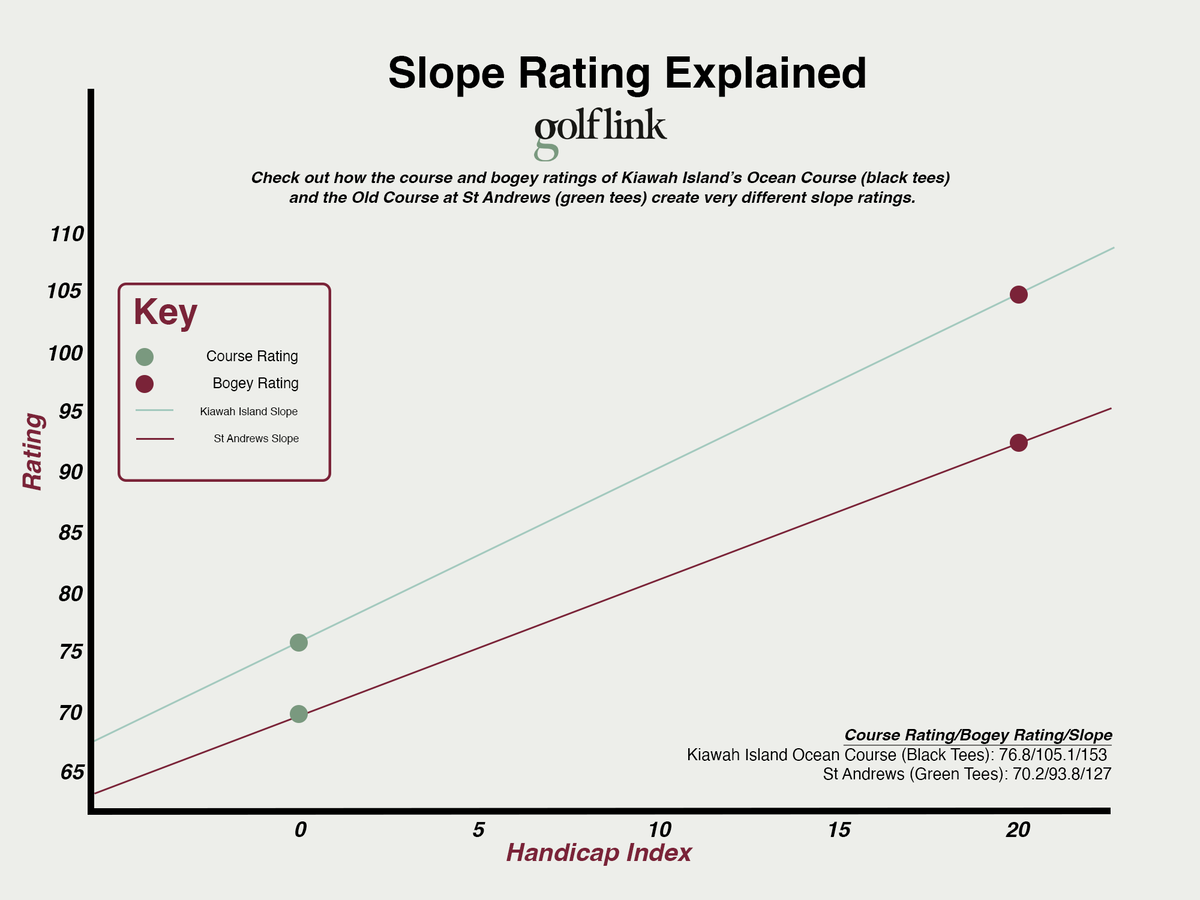
Ah, golf. That lovely game where grown adults hit tiny balls with fancy sticks, often in pursuit of sheer joy, and sometimes, just sheer madness. If you’ve ever found yourself on a golf course, you’ve probably heard the terms Slope and Rating tossed around like poorly aimed drives. But what exactly are these mystical numbers? Let’s dive in, with a healthy dose of skepticism and a chuckle, shall we?
Imagine the golf course is a grumpy old giant. This giant has a temper, and it shows in its landscape. That’s where Slope comes in, like a sneaky little whisper telling you just how much of a diva this giant is going to be today.
The Slope Rating is essentially a number that tells you how difficult a golf hole is for a golfer who isn't a pro. Think of it as the course’s way of saying, "Heh heh, you think you're good? Let's see about that!" It's not just about how far the hole is; it’s about all the sneaky stuff the course throws at you.
You know those holes where the fairway looks like it’s been rumpled by a toddler? Or where the bunkers are strategically placed like landmines? That's the Slope at play, making your life a little more… interesting. It’s the uphill battles and the downhill dodges.
A higher Slope Rating means the course is designed to be extra challenging for the average golfer. It's like the course is giving you a stern talking-to without actually speaking. "Watch out for that water hazard, you amateur!" it seems to say.
And then there’s the Course Rating. This one is like the giant’s baseline mood. It’s a number that tries to predict how well a scratch golfer – a golfer who's basically a walking golf encyclopedia – would do on that particular course.
A scratch golfer, by the way, is usually someone who can hit the ball straighter than a laser beam and putt like they have eyes in the back of their head. They make it look easy. Too easy, if you ask me.
![Golf Scorecard Explained [How To Read & Symbols]](https://www.bigteesgolfworld.com/wp-content/uploads/2023/04/f2fed220-03e0-4537-b02c-8b8f93bf3d51.png)
So, the Course Rating is the benchmark. It’s the standard from which all other suffering is measured. If the Course Rating is, say, 72.5, it means a scratch golfer is expected to shoot around 72 or 73. Sounds reasonable, right? For them, maybe.
But here’s where it gets fun. For us mere mortals, the Course Rating is just a starting point for our own personal journey of golf-induced existentialism. It’s the dream of what could be, versus the reality of what usually is. My reality is usually a lot higher than the Course Rating.
Now, let’s combine these two beasts: Slope and Rating. They work together to give you your official Handicap Index. This magical number is supposed to represent your overall golfing ability, and it's what allows us to play against each other and have a chance of winning, even if that chance is smaller than a hummingbird’s wingspan.
Your Handicap Index is calculated using your scores and the Course Rating and Slope Rating of the courses you play. It's a complex formula that probably involves ancient golf runes and the alignment of the planets. Or maybe just some fancy math.
The idea is that if you have a higher Handicap Index, you're considered a less experienced or less skilled golfer. And if you have a lower one, well, you’re probably one of those people who actually enjoy the game.

Let’s be honest, the Slope Rating is where the real entertainment is. It’s the spicy sauce on the bland chicken of the Course Rating. It’s what separates a gentle stroll through a park from a full-on obstacle course designed by a mischievous imp.
Consider a flat, wide-open course. It might have a Course Rating of, say, 70. But if there are no trees to get lost in, no water to fear, and no bizarrely placed sand traps, its Slope Rating will be pretty low, maybe around 110.
This means that even for a beginner, this course is relatively forgiving. It’s the golf equivalent of a warm hug. A slightly disappointing warm hug, perhaps, but a hug nonetheless.
Now, picture a course nestled in the mountains. It’s got narrow fairways that snake between ancient trees. The greens are sloped like the side of a ski jump. And every bunker seems to be the size of a small country.
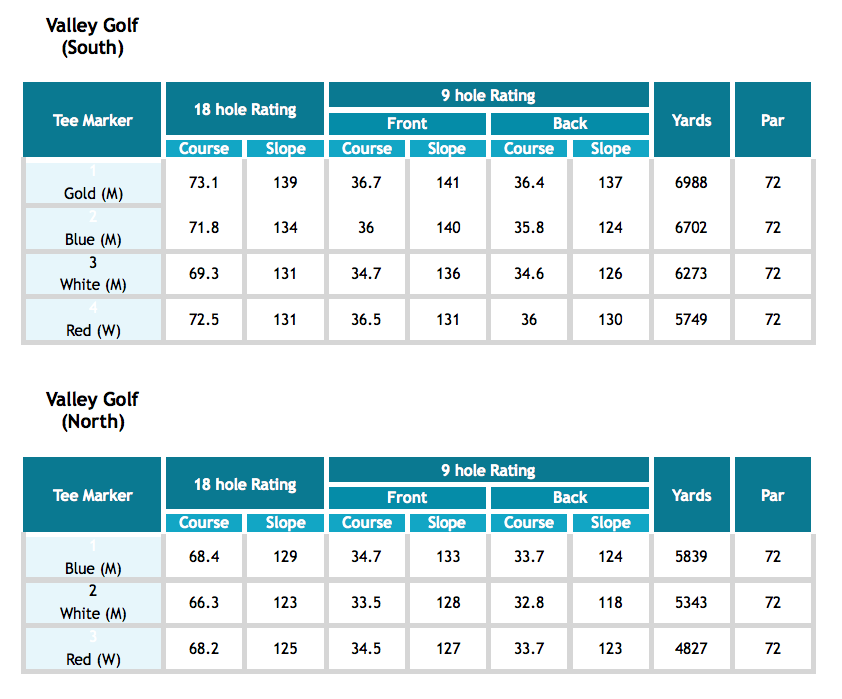
That course will have a high Course Rating, sure, because even the pros have to work hard. But its Slope Rating will be through the roof, maybe 135 or even higher! That’s the course laughing at you.
It's telling you, "You thought that last hole was tough? This one is going to make you question all your life choices!" The higher Slope means that for a golfer who isn’t a scratch player, this course becomes significantly harder than for the pros.
It’s the difference between a polite suggestion to avoid the rough and a screaming siren warning that if you stray too far, your ball might end up in another county. The Slope is the dramatic flair. It’s the plot twist in your round.
And here’s my unpopular opinion: sometimes, I think the Slope Rating is just the course's ego. It’s the golf course’s way of saying, "Look how challenging I am! I’m not just any old patch of grass; I’m an elite patch of grass that requires extreme skill and a touch of divine intervention!"
It's like when you see a ridiculously complicated menu item with a name that sounds like an epic poem. You know it’s going to be expensive, and you have no idea what you’re actually ordering.

The Slope Rating, in my humble opinion, often feels like a personal attack. It’s the calculated odds stacked against you. It’s the universe conspiring to ensure that your ball spends more time in the trees than on the fairway.
"Oh, this hole has a Slope of 130? That sounds… fun. I'm sure my carefully honed skills will be put to the ultimate test. Or I'll just lose a bunch of balls."
The Course Rating is the foundation, the base layer of difficulty. It’s the baseline. But the Slope? The Slope is the architecture of your impending doom. It’s the strategically placed water hazard that looks innocent until your ball decides to go on a solo aquatic adventure.
So, next time you’re staring down a daunting tee shot, or trying to figure out why your score is so much higher than your friend’s on the same course, remember Slope and Rating. They are the unsung heroes, or perhaps villains, of your golfing journey.
They are the numbers that explain why your round felt like a heroic battle against the elements, while someone else’s felt like a pleasant afternoon picnic. And maybe, just maybe, if we understand them a little better, we can at least pretend to have a strategy other than just hitting it really, really hard.
Or, we can just blame the Slope. It’s a lot easier, and frankly, more entertaining. Cheers to higher handicaps and lower expectations!