
What Is Golf Course Rating And Slope
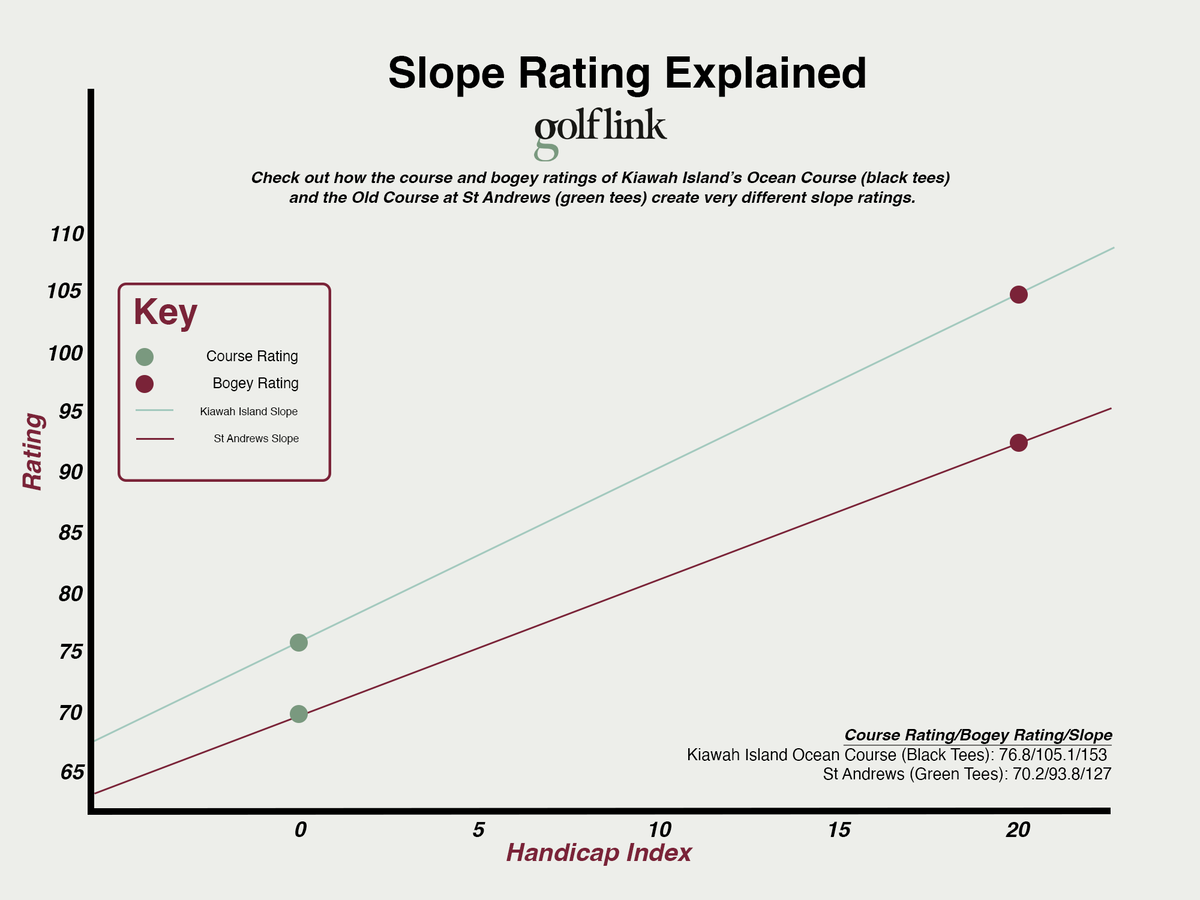
Ever found yourself watching golfers on TV, or perhaps even trying your own hand at the sport, and wondered about those cryptic numbers that pop up alongside course names? You know, the ones that look like a secret code for how tough a particular 18 holes might be? Well, let's pull back the curtain on those mysterious figures: golf course ratings and slopes. It might sound a bit technical at first, but understanding them can actually add a whole new layer of appreciation to the game, whether you’re a seasoned pro or just someone who enjoys a leisurely stroll on a sunny Saturday. Think of it as learning the secret handshake of golf's difficulty!
So, what exactly are these ratings and slopes, and why should you care? At its heart, the Golf Course Rating is an assessment of the playing difficulty of a course for a scratch golfer – that’s someone who can play the course in par or better. It represents the expected score for that scratch golfer. This rating is usually a decimal, like 72.3, and it helps golfers understand the general challenge of the course from a very skilled perspective. Then there’s the Slope Rating. This is where things get really interesting for the everyday player. The Slope Rating measures the relative difficulty of a course for a bogey golfer (a player with an approximate handicap of 20 for men and 24 for women) compared to a scratch golfer. A higher slope rating means the course is significantly more difficult for the average player than it is for the expert, often due to factors like narrow fairways, strategically placed hazards, and challenging green complexes. The standard slope rating for a course is 113.
The primary purpose of these ratings is to provide a fair and consistent handicap system. This means that golfers of all skill levels can compete against each other on a level playing field. For instance, if you’re playing a course with a high slope, your handicap may be adjusted upwards for that round, giving you more strokes to offset the course’s difficulty. This is incredibly beneficial because it ensures that a good score on a tough course is recognized as a better performance than the same score on an easier one. It’s like comparing apples and oranges if you don’t have a system to account for the inherent challenge of different venues.
Beyond the golf course itself, the concept of rating difficulty can be found in many areas of our lives. Think about how video games are assigned difficulty levels, or how ski resorts categorize their slopes from beginner-friendly greens to advanced blacks. Even when choosing a hiking trail, we often look at its length and elevation gain to gauge its difficulty. In education, standardized tests have different versions or difficulty levels to assess students appropriately. It’s all about understanding and quantifying challenge.
Interested in exploring this further? The simplest way is to simply look up the rating and slope for any golf course you’re interested in playing. Most golf course websites will proudly display these numbers. You can also find them on golf apps and scorekeeping platforms. When you're planning a round, pay attention to the slope: a 70.0 rating with a slope of 130 will play much harder for you than a 70.0 rating with a slope of 110. It’s a fantastic tool to set realistic expectations and can even help you choose a course that best suits your current game. So next time you're planning a golf outing, dig a little deeper into those numbers – you might just find yourself appreciating the game (and your own score!) a whole lot more.