
What Is Base Curve In Contact Lenses

Hey there, you! So, you're diving into the wonderful world of contact lenses, huh? That's awesome! It's like trading in your glasses for a whole new perspective, right? But before you get all jazzed up about colors or fancy toric lenses for astigmatism, there's this one little thing we gotta chat about. It's called the base curve. Sounds a bit technical, I know, but stick with me, it's actually super important, and we'll break it down like a comfy couch session. Think of this as your friendly, no-judgment guide to understanding what makes those little discs hug your eyes just right.
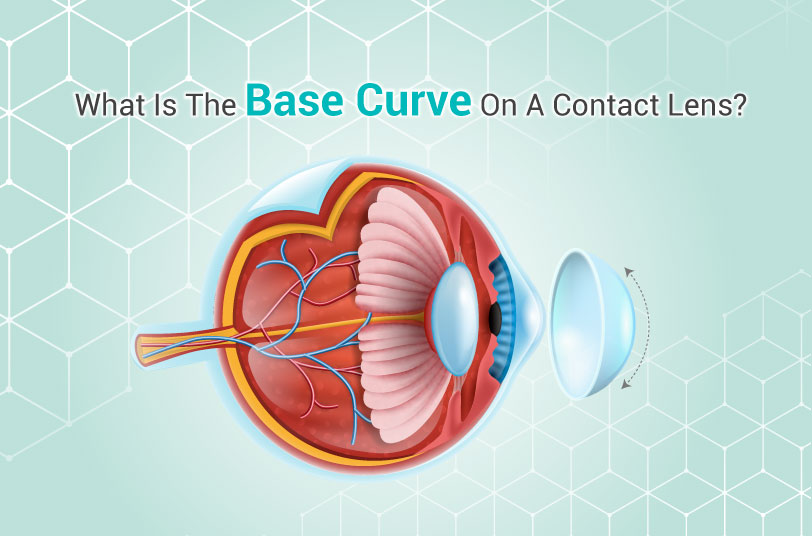
So, what even is this base curve thing? Imagine your eyeball. Yeah, I know, weird mental image, but humor me! It's not perfectly flat, is it? It's kind of… round. Like a tiny, precious eyeball-shaped sphere. Now, a contact lens needs to fit on that sphere. And not just any sphere, but your sphere. That's where the base curve comes in. It’s basically the steepness of the back surface of your contact lens.
Think of it like this: have you ever tried on a hat that's just a little too tight? Or maybe a shoe that’s a bit too wide? It just feels… off, doesn't it? You can’t quite get comfortable, and it might even start to hurt after a while. Well, a contact lens is kind of the same deal. If the base curve of the lens doesn't match the curve of your eye, you're gonna have a bad time. Like, a really bad time. We're talking blurry vision, irritation, maybe even your lens feeling like it's trying to escape your eye. Nobody wants that, right? We want our lenses to feel like a second skin, not a wrestling match.
So, how does this magical base curve get determined? Well, it's not something you just guess. This is where your friendly neighborhood eye doctor comes into play. They’ve got all sorts of fancy tools to measure the curvature of your eye. It’s usually done during a contact lens fitting. They’ll look at your eye, maybe use a special machine that shines lights and stuff (super high-tech!), and then they’ll figure out the perfect diameter and base curve for your lenses.
It’s like getting fitted for a custom suit, but for your eyes. You wouldn't get a suit off the rack and expect it to fit perfectly, would you? Same with contacts. They need to be tailored, in a way, to your unique eye shape. And that base curve is a huge part of that tailoring. It’s like the master tailor saying, "Okay, this client has a slightly more rounded shoulder, so we need to adjust the sleeve cut here." For your eyes, it’s "This eyeball has a slightly shallower curve, so we need a less steep base curve." Makes sense, yeah?
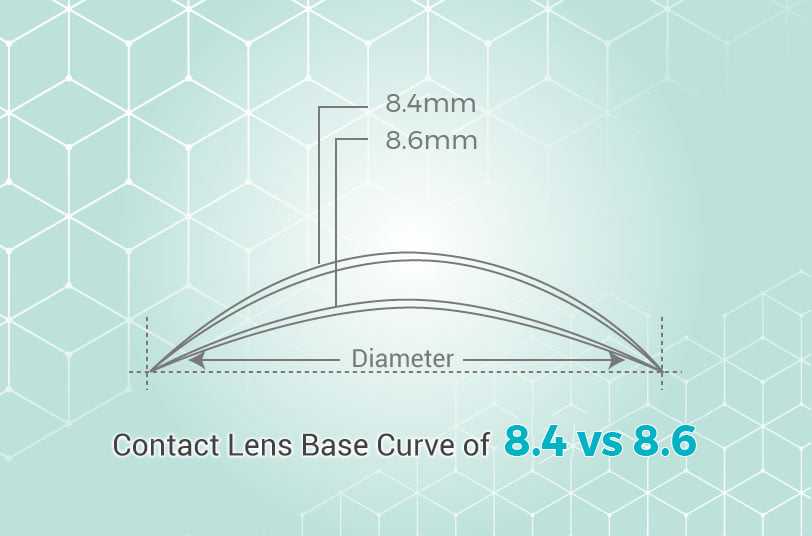
Now, why is this steepness so darn important? Let's get a little nerdy for a sec, but don't worry, still keeping it chill. The back surface of the contact lens needs to sit comfortably on the cornea, which is the clear front part of your eye. If the base curve is too steep (think: a very tight curve), the lens will press too hard on your cornea. This can restrict oxygen flow, which our corneas desperately need. Like, desperately. They can't breathe through eyelids alone, bless their little transparent hearts. So, poor oxygen can lead to discomfort, redness, and a whole host of other eye woes.
On the flip side, if the base curve is too flat (think: a very gentle, wide curve), the lens will be too loose. It'll slide around on your eye. Imagine trying to read with your glasses constantly slipping down your nose. Annoying, right? A loose contact lens can do the same thing. It won't stay centered, which means your vision will be all over the place. One minute you're seeing 20/20, the next it's like looking through a kaleidoscope that's broken. Plus, all that sliding can cause friction and irritation. Ouch.
So, we're aiming for that Goldilocks zone. Not too steep, not too flat. Just right. The perfect amount of hug, if you will, from the lens to your cornea. It should feel snug enough to stay put but loose enough to let your eye breathe and blink freely. It's a delicate balance, really. Like walking a tightrope, but with way less danger of falling and a much better view.
You might have noticed that contact lenses come in different sizes, right? There's the diameter, which is how wide the lens is. And then there's the base curve, which, as we've established, is how steep the back surface is. These two things work together. Even if you have a slightly larger eye, you might still need a specific base curve to ensure a good fit. It's a whole system, a beautiful dance of optics and anatomy.
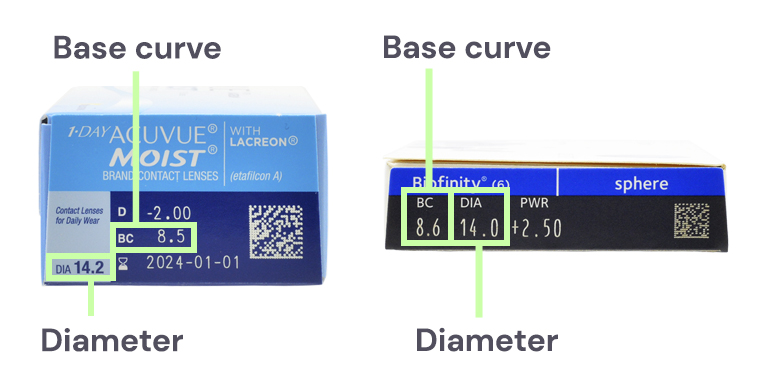
What's really interesting is that most people fall into a pretty common range for base curves. It's often around 8.3 to 8.7 millimeters. But, and this is a big but, there are always exceptions! Some people have corneas that are a bit steeper, and some are flatter. That's why getting a proper fitting is so crucial. You can't just grab a box of lenses from the internet and hope for the best, my friends. Trust me on this. Your eyes will thank you.
Think about it: your eyes are arguably the most important sensory organs you have. They let you see the world! The beauty of a sunrise, the smile of a loved one, that hilarious meme your friend sent you – all thanks to your eyes. So, treating them right with properly fitted contact lenses is a no-brainer, really. It’s like investing in a really good pair of running shoes if you’re a marathon runner. You wouldn't skimp on that, would you?
Now, let's talk about the practicalities. When you go for your eye exam, your eye doctor will likely have a few different lenses they’ll try on you. They'll put one in, have you look at some charts, maybe blink a few times, and then they’ll give you their expert opinion. They're not just looking at how clear your vision is; they're also checking how the lens is moving on your eye. Is it centered? Does it move too much when you blink? Does it feel comfortable?
They might even use a special dye called fluorescein. It's like a little glow-in-the-dark magic potion for your eyes. When it's under a special light, it shows exactly how the lens is interacting with your cornea. It can reveal little areas where the lens might be pressing too hard or where there's a gap. It’s like a tiny detective revealing the secrets of your eye-lens relationship. Pretty cool, huh?

So, let's recap, because I know I've thrown a lot of info at you. The base curve of a contact lens is the steepness of its back surface. It’s designed to match the curvature of your cornea, the front of your eye. A good match is essential for comfort, clear vision, and good eye health. If it's too steep or too flat, you're going to have problems. And who wants problems when you're just trying to see clearly?
Here’s a little analogy to really nail it home: Imagine you’re baking cookies. The cookie cutter is the shape of your lens. But the dough itself, how thinly or thickly you roll it out, that’s kind of like the base curve. You want the dough to be just right so the cookie cutter makes a perfect, clean shape. If the dough is too thick, the cookie might be bulky and misshapen. If it's too thin, it might spread out weirdly in the oven. You need that perfect consistency for a perfect cookie. Your eye and your contact lens are that perfect cookie recipe!
And here's a fun little fact: even if two people have the same prescription (meaning the same power for nearsightedness or farsightedness), they might still need different base curves! It’s true! Your cornea shape is as unique as your fingerprint. So, that’s why you absolutely, positively, cannot share contact lenses. Not even if your best friend has the exact same prescription. It’s a major no-no, folks. It’s like wearing someone else’s underwear. Just… don't. Ever.
What else is there to know? Well, sometimes, if your eyes are particularly unique, you might need custom-made lenses. These are less common but they exist! They're for those who just don't fit the standard mold. But for most people, their eye doctor will be able to find a lens within the standard range that works like a dream. It’s all about that perfect fit, remember?
So, next time you're picking up a new box of contacts or heading in for your yearly eye exam, don't just gloss over the details (pun intended!). Ask your eye doctor about your base curve. They’ll probably be delighted to explain it to you. It shows you're engaged and you care about your eye health. And isn't that what we all want? To be in the know about our own bodies? Especially the bits that help us see the world in all its glory!
Remember, those little pieces of plastic are doing a lot of work for you. They’re correcting your vision, they’re making you feel confident, and they’re allowing you to experience life without the hassle of glasses. So, giving them the right foundation, the right base curve, is just good sense. It's like building a sturdy house – you need a strong foundation, otherwise, things can get wobbly pretty fast. And we definitely don't want wobbly vision.
So, there you have it! The not-so-secret secret of the base curve. It’s all about finding that perfect, snug-but-breathable fit for your precious eyeballs. It's a small detail, but it makes a world of difference. Now go forth and dazzle with your perfectly fitted, super comfortable contact lenses! And if you ever feel like your lenses are acting up, don't be shy – go see your eye doctor. They’re the pros, and they’re there to help you see the world clearly and comfortably. Your eyes will be eternally grateful. Seriously. They’ll probably send you little thank-you notes. Maybe. Probably not, but you get the idea!