
What Does The Bounce On A Wedge Mean

Hey there, golf enthusiasts and curious minds alike! Ever found yourself watching a golf swing, particularly around the green, and heard someone mutter something about "the bounce on a wedge"? Or maybe you've seen a golfer dig into the sand with their club and wondered what's going on there? It sounds a bit technical, right? Like something you'd only need to know if you were, you know, actually playing golf. But stick with me, because this little detail, this "bounce," is actually pretty fascinating, and understanding it can totally change how you see those tricky shots. Think of it as a secret handshake between the club and the ground. Pretty cool, huh?
So, what exactly is this "bounce" we're talking about? Imagine your wedge, that club you use for those shorter, loftier shots. Now, look at the bottom of it, the part that actually hits the turf or the sand. You'll notice it's not perfectly flat, is it? There's a curve, a sort of rounded sole. That curvature, that angle where the leading edge (the front edge of the clubface) is slightly lifted off the ground when the club is resting flat, that's the bounce.
It’s like the wedge has a little built-in ski or a sled on its underside. Instead of the sharp leading edge digging straight into the ground and getting stuck, the bounce helps the club glide or "bounce" over the surface. Revolutionary, right? It’s the difference between your kid’s sled digging a massive hole in the snow and them gliding smoothly down a hill. Same principle, just with golf clubs and dirt!
Why does this matter, you ask? Well, it's all about making your life easier on the golf course, especially in those sandy traps or when you’re chipping from a bit of rough. Without bounce, every shot would be a potential disaster. Imagine trying to take a bite out of an apple with just the very tip of your knife – it’s going to dig in, splatter, and make a mess. Now imagine using the side of the knife; it’s going to slide and cut more cleanly. The bounce is that "sliding" part for your wedge.
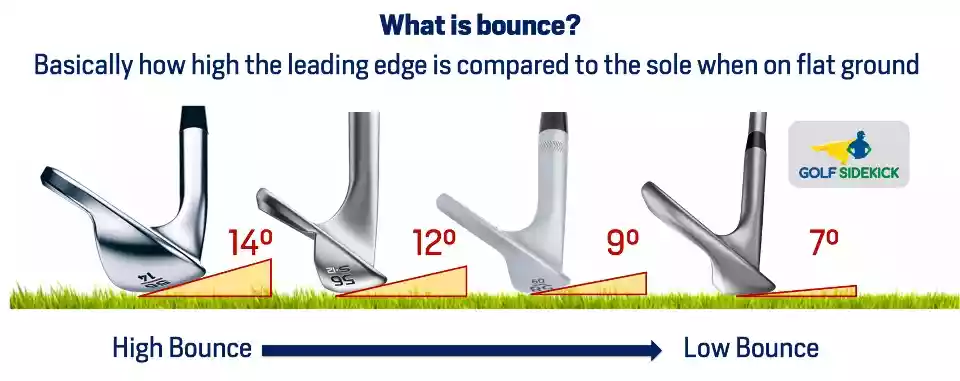
So, different wedges have different amounts of bounce. You'll hear golfers talk about high bounce, medium bounce, and low bounce wedges. And this isn't just some arbitrary number; it's designed to help you with different types of shots and different playing conditions. It’s like having different tools in your toolbox. You wouldn't use a tiny screwdriver to hammer a nail, would you? Same idea here.
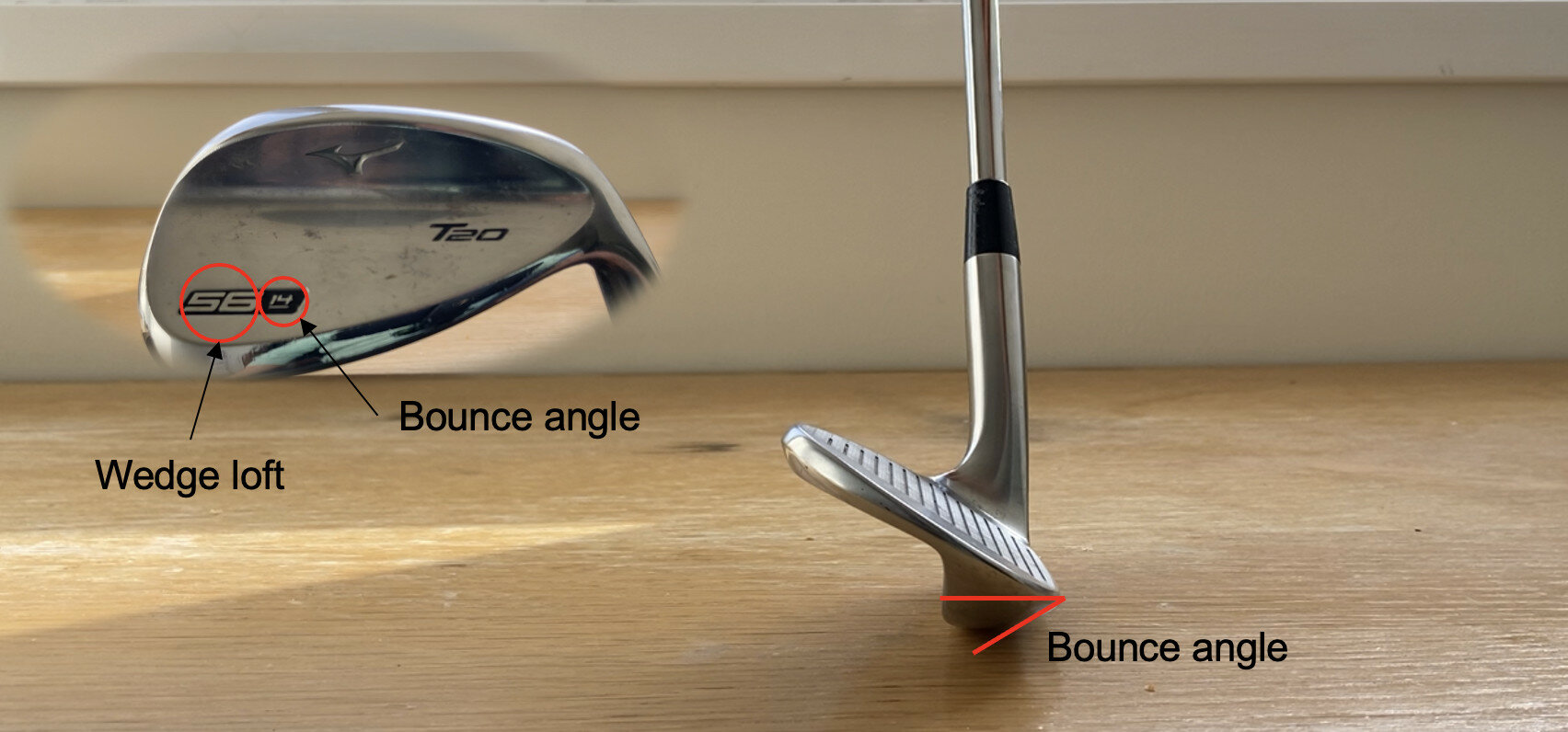
Let's break down these bounce levels. A low bounce wedge, typically with less than 6 degrees of bounce, is designed for firm turf and tight lies. Think of a perfectly manicured fairway or a very hard, dry patch of ground. On these surfaces, you want the clubface to get as close to the ball as possible, with minimal interference from the turf. A low bounce wedge allows the leading edge to sit closer to the ground, giving you more control on those delicate little chips and pitches where precision is key. It's like a surgeon's scalpel – sharp, precise, and for delicate work.
Then you have your medium bounce wedges. These are the all-rounders, the workhorses of the wedge world. They’re versatile and can handle a variety of conditions, from slightly softer fairways to medium rough. They offer a good balance between the digging tendency of a low bounce and the gliding action of a high bounce. If you're a golfer who doesn't have a specific "go-to" condition, a medium bounce wedge might be your best friend. It's like a multi-tool; it can do a bit of everything pretty well.

And finally, the star of the show for many sandy situations: the high bounce wedge. These wedges, often with 10 degrees of bounce or more, are your best mates when you're facing soft sand or thick, fluffy lies. That generous bounce on the sole means the club is much less likely to dig into the sand. Instead, it’s designed to skim or "bounce" through the sand, popping the ball out with minimal resistance. It’s like a snowmobile for the sand – it floats on top and glides through!
Think about a bunker shot. If you tried to hit a bunker shot with a low bounce wedge, that sharp leading edge would likely dig deep into the sand, stopping the club dead in its tracks and leaving your ball sadly nestled in the bunker. But with a high bounce wedge, the sole kicks up, the club glides through the sand, and poof! the ball flies out, hopefully towards the pin. It's all thanks to that clever bounce!
It's not just about sand, though. High bounce wedges can also be a lifesaver for golfers who tend to "dig" too much into the turf on their approach shots. If you’re someone who leaves really deep divots, a high bounce wedge can help you take a shallower, more sweeping divot, preventing you from getting too much turf caught between the clubface and the ball. It’s like training wheels for your swing, helping you get the club to flow through the grass.
So, the next time you're looking at a wedge, or even just watching golf, pay attention to that sole. That little curve, that bounce, is a seriously important piece of golf club design. It's what allows for those delicate chip shots, those escape-from-the-bunker miracles, and ultimately, makes the game a little bit more forgiving and a lot more fun.
It’s a testament to how even the smallest design features can have a massive impact on performance. It’s the little things, right? Like the way a perfectly balanced bicycle feels under you, or how a comfy chair just fits. The bounce on a wedge is that perfect fit between the club and the ground, making those tricky shots feel a whole lot less tricky. So go forth, appreciate the bounce, and maybe, just maybe, you'll start thinking about your own wedges a little differently. Happy swinging!