
What Does Otp Mean In Text Messaging
Ever scrolled through your messages and stumbled upon a cryptic string of letters and numbers that looks like it belongs in a secret agent's handbook? Yeah, me too. And if you've ever wondered, "Wait, what does OTP mean in text messaging?", you're definitely not alone. It’s one of those little internet mysteries that pops up out of nowhere, leaving you scratching your head.
So, what's the deal? Is it some new emoji combination? A secret code between best friends? A typo? Nope, it's actually something much more practical, and honestly, pretty cool. OTP stands for "One-Time Password".
Think of it like a secret handshake, but digital. It’s a special code that’s generated just for a single use, usually to make sure that you are really you when you're trying to do something important online.
Why the Mystery?
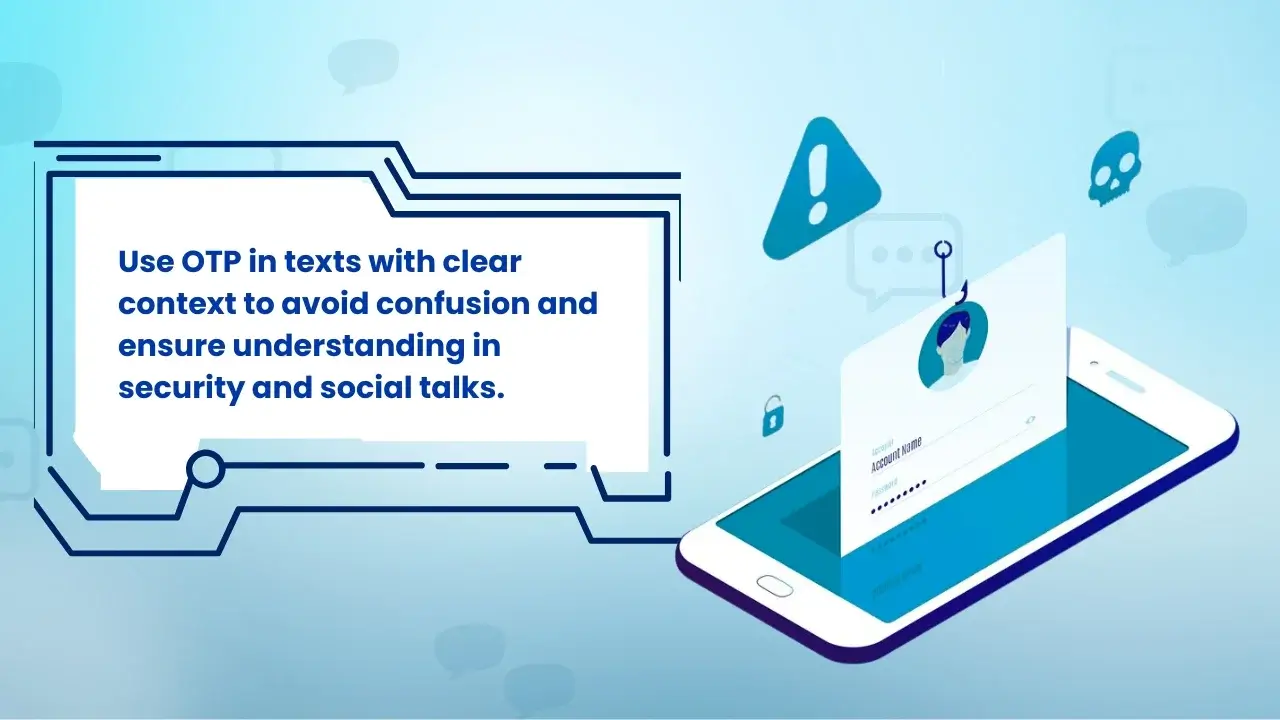
You might be thinking, "Why all the fuss? Why not just use my regular password?" That's a fair question! The reason OTPs are so important is because they add an extra layer of security. It's like having a doorman and a lock on your front door.
Your regular password? That's your main key. It's what you use to get into your accounts. But what if someone manages to snag that key? That's where OTPs come in to save the day. They're like a temporary, secret key that only works for a few minutes.
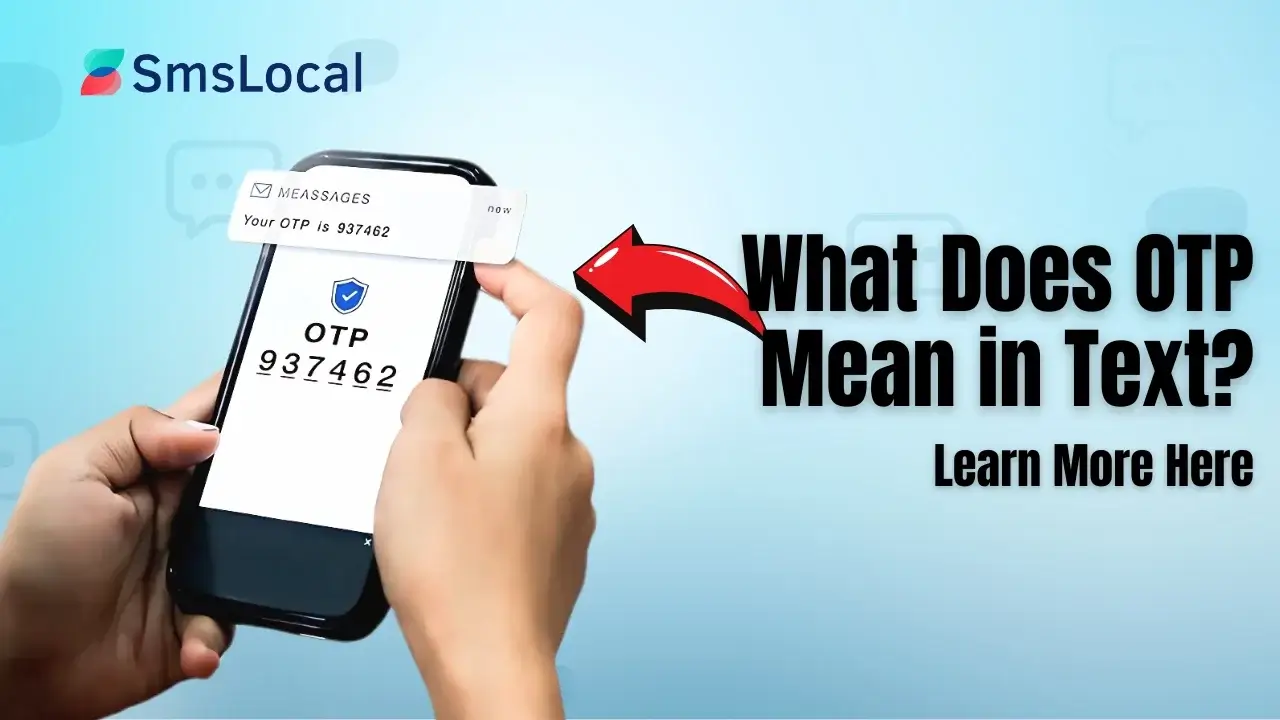
So, when you’re logging into your bank account, making a big online purchase, or even resetting a forgotten password, you might get a text message with a six-digit (or sometimes more!) code. That’s your OTP. You then pop that code into the website or app, and voilà, you’ve proven your identity. It's a super simple way to keep your digital life safe and sound.

The "One-Time" Part is Key
The "one-time" part is really the star of the show here. Once you use that code, it's done. It's like a single-use concert ticket; you can’t use it again for another show. This is brilliant because even if a sneaky hacker managed to intercept your password and your OTP, that OTP wouldn't do them any good after its first use. They’d be left with a useless string of numbers, while your account remains securely yours.
It’s a clever little trick, isn't it? The internet is always coming up with these ingenious ways to keep us safe while still making things easy for us. And OTPs are a prime example of that.
When Do You See Them?
You'll likely encounter OTPs in a few common scenarios:

- Logging In: Many websites and apps now offer two-factor authentication (2FA) or multi-factor authentication (MFA). This is where OTPs shine. You enter your password, and then you’re prompted for that magical OTP sent to your phone.
- Transactions: For significant purchases or money transfers, your bank might send an OTP to confirm it's really you making the move.
- Password Resets: If you’ve forgotten your password, instead of just relying on a security question (which can sometimes be guessed), you might receive an OTP to verify your identity before creating a new password.
- Account Verification: Sometimes, when you first sign up for a service, they’ll send an OTP to your phone number to confirm it’s a valid and active number.
It’s become such a standard practice that it’s almost surprising when you don’t get an OTP for a sensitive action. It’s like expecting a waiter to bring you water and they forget – it just feels a little off!
It's All About Security, Baby!
The beauty of the OTP system is how it tackles a fundamental problem: how do you know the person on the other end is who they claim to be? In the digital world, where everything is done through screens and signals, it’s not always obvious. OTPs are a sophisticated way to answer that question without making things overly complicated for us.
Think about it this way: Imagine you're sending a secret message to a spy friend. You have a secret code word. But to make sure no one else can use that code word, you decide that this specific code word will only work for the next five minutes. If your friend doesn't use it in that time, you have to come up with a new code word. That's essentially what an OTP does. It adds that time-sensitive, single-use element of surprise to your security.
It’s like a digital game of hot potato, but instead of a potato, it’s your online security, and the goal is to pass it securely to the right person before it expires!
The "Cute" Factor? Maybe Not, But Definitely Important!
Okay, maybe "OTP" itself isn't the most exciting acronym in the world. It doesn't have the same pizzazz as "LOL" or "BRB." But the concept behind it is pretty neat, right? It's a silent guardian, a digital bodyguard working in the background to protect your precious online life.
It’s a testament to how far we've come with technology. From simple passwords that could be easily guessed (remembering "password123"?) to these dynamic, single-use codes, our online security has gotten way smarter. And you, as a user, get to benefit from all that brainpower with just a quick glance at your text messages.
So, the next time you see that little text message with a string of numbers pop up, don’t just dismiss it as spam or some random notification. Take a moment to appreciate it! It’s your OTP, your one-time password, and it's working hard to keep your digital world safe.
A Little Bit of Digital Magic
It’s kind of like a tiny piece of digital magic happening behind the scenes. You do your thing, and poof, the system verifies you with a code that’s good for just that one moment. It’s efficient, it’s secure, and it’s become an essential part of our online interactions.
So, there you have it! OTP in text messaging means One-Time Password. It’s a crucial security feature that makes online transactions and logins much safer. It’s not just random letters and numbers; it’s your digital shield, a secret code for your own protection. Pretty cool when you think about it, right? Keep an eye out for them, and know you're in good hands (or, well, good circuits!).