
What Does A Dry Sense Of Humour Mean
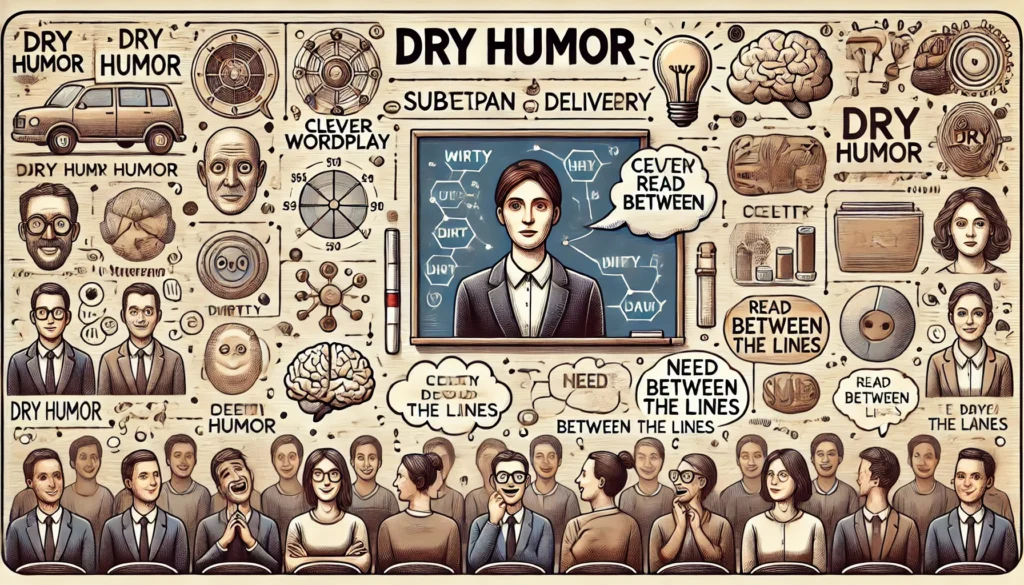
Hey! Grab your mug, settle in. We're gonna chat about something a little… dry. You know, that kind of humor that sneaks up on you, like a ninja in tweed? Yeah, that's what we're diving into. Ever met someone, and they just dropped this perfectly timed, slightly absurd comment, and you blinked, then chuckled, then realized, "Whoa, that was hilarious!"? That, my friend, is the magic of a dry sense of humor.
So, what is a dry sense of humor, anyway? Is it just being a bit grumpy? Nah, not quite. It's more like… understated brilliance. It’s the opposite of a guy who jumps out from behind the sofa with a rubber chicken, screaming "BOO!" (Though, honestly, sometimes that's fun too, right?).
Think of it like this: a loud joke is a fireworks display. BAM! Colors! Noise! Everyone sees it. A dry joke is more like a single, perfectly placed LED light. It might not be flashy, but when you notice it, it’s incredibly effective. It makes you think, it makes you look closer, and then, chef's kiss, you get it.
The Art of Understatement
At its core, dry humor is all about understatement. It's saying something that could be a big deal, or a really funny deal, in the most casual, almost dismissive way possible. It’s like, if you just won the lottery and someone asked how your day was, and you just shrugged and said, "Oh, you know, same old, same old. Bought some milk." Wild, right?
It’s the pause before the punchline, but the punchline is so subtle, you almost miss it. It’s in the delivery, the tone, the slight tilt of the head. The person delivering the joke isn't usually guffawing along with you. They might even look a little bit serious, which, paradoxically, makes it even funnier.
Imagine someone describing a disaster. A huge disaster. Like, their house just exploded. Instead of screaming and crying, they might just calmly say, "Well, that's inconvenient." Inconvenient! Can you imagine the sheer, unadulterated audacity of that understatement? It’s so far removed from the reality of a blown-up house that it circles back around to being hysterically funny.
It’s Not About Being Unfunny
This is a crucial point. Just because it's dry doesn't mean it's unfunny. Far from it! It's just a different flavor. It's like comparing a spicy curry to a subtle consommé. Both are delicious, but they appeal to different palates. Dry humor is for those who appreciate the nuances, the wit that requires a bit of active listening and observation.
Think about some of your favorite comedians. Are they all doing pratfalls and wearing clown noses? Probably not. Many of them rely on sharp observations, clever wordplay, and that signature deadpan delivery. They’re telling you something ridiculous, but with a straight face. It’s a masterclass in making you laugh without them even cracking a smile.
So, when someone has a dry sense of humor, they’re not trying to be miserable. They’re just expressing their amusement in a sophisticated, often very clever, way. It’s a quiet rebellion against the expected explosion of laughter. It's the knowing wink from across the room, not the belly laugh that shakes the building.
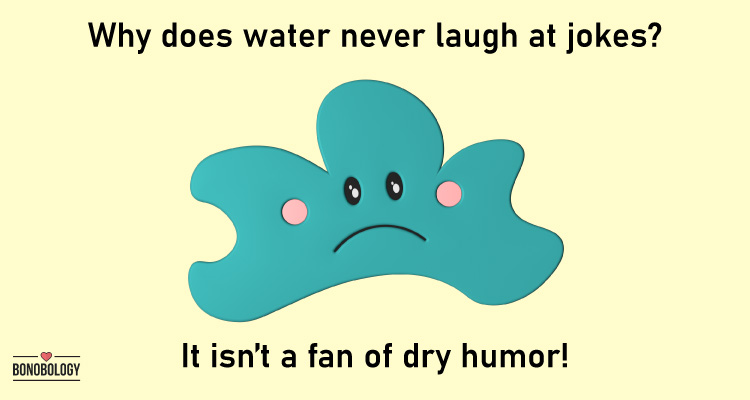
Where Does It Come From? The Roots of Dryness
You might be wondering, "Where does this kind of humor even come from?" Is it something you’re born with? Or is it learned behavior? It's probably a bit of both, honestly. Some people just have a naturally understated way of looking at the world. They see the absurdity, but their reaction is more of a raised eyebrow than a double-take.
Culture plays a big role too. Certain countries and regions are renowned for their dry wit. Think of the British, for instance. They’ve practically perfected the art of the sarcastic quip delivered with impeccable politeness. It’s a national treasure, really. You can compliment someone’s terrible outfit, and they’ll thank you, all while you’re both silently acknowledging the sartorial disaster.
It can also be a defense mechanism. When things are truly terrible, sometimes the only way to cope is to find the humor in it, and dry humor is a fantastic tool for that. It’s a way of acknowledging the bad without letting it completely overwhelm you. It’s saying, "Yeah, this sucks, but let's not pretend it's not also kind of ridiculous."
The Delivery is Everything
We’ve touched on this, but it's so important it deserves its own moment. The delivery of dry humor is paramount. It’s not just about what you say, but how you say it. The key elements are:
- Deadpan Face: No grinning, no smirking. Maintain a neutral, almost serious expression. This is crucial for the element of surprise.
- Monotone or Slight Lilt: Avoid overly enthusiastic inflections. A calm, steady voice is your best friend here.
- Timing: A well-timed pause can amplify the effect. Let the absurdity sink in for a moment before the listener catches on.
- Subtle Inflection: While the overall tone is flat, a slight, almost imperceptible shift in your voice can signal that something’s up, without giving it away completely.
It’s like a magician’s trick. They distract you with one hand while the real magic happens with the other. With dry humor, the seemingly serious delivery is the distraction, and the clever, witty observation is the magic that leaves you thinking, "Wait a minute… that was brilliant!"
Imagine a friend is complaining about a minor inconvenience, like running out of their favorite tea. A dry response might be, "Oh dear. The fabric of society is surely unraveling now." The sheer over-the-top melodrama applied to such a trivial matter, delivered with a straight face, is what makes it so funny. You know they don't actually think society is collapsing, and that’s why it lands.
The Subtle Art of Sarcasm
Dry humor and sarcasm often go hand in hand. Sarcasm, at its heart, is saying the opposite of what you mean, usually to mock or convey contempt. But with dry humor, it’s often gentler, more playful. It's less about tearing something down and more about pointing out its inherent absurdity.

A classic example: You're walking through a torrential downpour, soaked to the bone. Someone says, with a perfectly straight face, "Lovely weather we're having." They don't mean it’s lovely, obviously. But the lack of a dramatic reaction to the miserable weather, and the calm assertion that it’s lovely, is what makes it humorous. It’s a shared understanding of the obvious truth, twisted into a polite absurdity.
It’s like a secret handshake for people who get it. You exchange a dry, sarcastic comment, and if the other person smiles (or even better, gives a slight, knowing nod), you know you’ve found your tribe. It’s a connection built on shared observational humor and a mutual appreciation for the ridiculousness of life.
The Risks of Being Too Dry
Now, it's not always smooth sailing. There are times when dry humor can go awry. If you're not careful, or if your audience isn't quite tuned in, your perfectly crafted, understated joke might just… fall flat. Completely flat.
You might deliver your brilliant, witty observation with all the deadpan conviction in the world, and the other person just stares at you blankly. "Uh… what?" they might ask. And then you have to decide: do you explain it, thereby killing the magic? Or do you just let it lie, and feel a tiny bit deflated?
This is why understanding your audience is key. If you’re talking to someone who’s very literal, or who’s having a rough day and isn’t in the mood for subtle jokes, your dry wit might just go over their head, or worse, be misinterpreted. It can sometimes come across as cold, or even mean, if the intention isn’t clear.
It's a delicate balance, isn't it? You're trying to be funny without being obvious. You're trying to get a laugh with a whisper, not a shout. And sometimes, the whisper just doesn't carry. It requires a certain level of engagement and understanding from the listener.
Who Has a Dry Sense of Humour?
So, who are these magical beings who wield dry humor like a finely sharpened quill? Well, it’s not a specific personality type, but you’ll often find it in people who are:
- Observant: They notice the little things, the ironies, the absurdities of everyday life.
- Intelligent: There’s often a cleverness to the wordplay or the logic behind the joke.
- Calm and Collected: They don’t tend to be overly boisterous or dramatic.
- Witty: They have a quick mind and can spin words in unexpected ways.
- Perhaps a little bit British (or from similar cultures): As mentioned, there's a strong cultural association!
It's the colleague who can defuse a tense meeting with a perfectly timed, subtly sarcastic comment. It's the friend who can summarize a chaotic situation with a single, understated phrase that perfectly captures the madness. It’s the writer who can make you laugh out loud with a single, perfectly placed adjective.
And let's be honest, sometimes it's just a way of saying, "I'm not letting this get to me." It's a way of asserting a little bit of control and wit in a world that often feels overwhelming. It's a quiet strength, delivered with a smirk that’s almost invisible.
Is it the Same as Being Sarcastic?
We touched on this, but let's really dig in. While often intertwined, dry humor isn't exactly the same as sarcasm. Sarcasm is generally about saying the opposite of what you mean, often with a critical or mocking edge. Dry humor can employ sarcasm, but it doesn't have to. It can also be purely observational or a form of ironic understatement.
Think of it like this: Sarcasm is often a hammer, used to make a point forcefully. Dry humor is more like a scalpel, used for precise, delicate work. You can use a scalpel to be sarcastic, but you can also use it for something else entirely.
For example, if someone is boasting about their achievements, a sarcastic response might be, "Wow, you're so humble." A dry response might be, delivered with a slight nod, "Impressive. Quite the résumé." The latter acknowledges the achievement in a way that’s almost bland, which, in the context of boasting, becomes humorous. It’s not overtly mocking, but it’s certainly not gushing praise either.
The key differentiator is often the intent and the tone. Sarcasm can sometimes carry an edge of bitterness or disdain. Dry humor, at its best, is more about clever observation and shared amusement. It’s a nod to the absurdity of life, rather than a pointed jab at someone’s expense.

How to Appreciate and Use Dry Humor
So, how do you get better at spotting it? And how do you even try to deploy it yourself without sounding like a robot who’s just been programmed with a thesaurus?
First, listen carefully. Pay attention to the tone, the pauses, the subtle facial expressions (or lack thereof!). If someone says something that seems a little too calm for the situation, or a bit understated, there’s a good chance you’ve just witnessed some dry wit.
Second, don’t be afraid to think. Dry humor often requires a moment of processing. Let the comment settle in your brain. Does it make sense literally? If not, what might it mean? That little mental gears-turning moment is where the appreciation happens.
Third, to try it yourself, start small. When someone says something that’s a mild inconvenience, try a very understated, almost flat response. Instead of "Oh no!" say, "Right. That's a situation." Or if something slightly unexpected happens, instead of "Wow!" try, "Interesting turn of events."
And remember, practice makes perfect. The more you engage with dry humor, the better you'll become at recognizing it and even generating it. It’s like learning a new language – at first, it’s a bit clunky, but eventually, it becomes second nature.
Don’t be discouraged if your first few attempts land with a thud. That’s part of the learning process! The important thing is to have fun with it, to enjoy the cleverness and the subtle art of making people laugh without them even realizing they’re laughing until a second later. It’s a sophisticated form of comedy, and once you get it, it’s incredibly rewarding.
So, there you have it. Dry humor. It’s not about being gloomy, it’s about being witty in a quiet, clever way. It’s the understated wink, the subtle nod, the perfectly placed absurd observation. It’s a delightful, often brilliant, way to navigate the world. Now, go forth and appreciate the dryness! And maybe, just maybe, try a little bit of it yourself. Just don’t expect me to crack a smile if you do it wrong… unless, of course, that’s part of the joke. 😉