
Signs Of Infection After Neutering A Dog
So, your furry best friend just went through the snip-snip, huh? It’s always a little nerve-wracking, isn't it? Like, you hand them over all waggy-tailed and happy, and then BAM! They wake up looking a little… fuzzy. But hey, it’s for their own good, right? Less roaming, less drama, more couch cuddles. Score!
Now that they’re home, and you’re playing nurse extraordinaire, it’s natural to get a little antsy. You’re constantly peeking at that incision site. Is it supposed to look like that? Is that a little red? Is that… a tiny bit swollen? Gah! Don't you just want a crystal ball for doggy post-op care?
Well, you're not alone, my friend. We’ve all been there, staring at our post-neuter pups like they're some kind of medical mystery. So, let's spill the beans, shall we? What are some of the real signs that your dog might be fighting off a little bug after their big day?
When Things Go a Little Sideways
Look, most of the time, your pup bounces back like a champ. Seriously, they’re tough cookies! But sometimes, just sometimes, things can get a little… infectious. And that’s where you, the super-sleuth owner, come in. Your mission, should you choose to accept it, is to spot the sneaky signs of trouble before they become a big kerfuffle.
Think of me as your friendly neighborhood vet assistant, chatting with you over a much-needed latte. No fancy medical jargon, just straight-up, down-to-earth advice. Because let's be honest, who has time for that when your dog is giving you the puppy-dog eyes from the recovery bed?
The Incision Site: Your First Line of Defense
This is where all the action happens, right? That little patch of shaved fur and the neat little stitches. It’s the epicenter of your post-op vigilance. So, what should you be looking for here? What’s normal, and what’s a big, fat red flag?
First off, a little redness is totally okay. Like, a tiny bit. Think of it as a blush, not a full-blown sunburn. The skin around the incision might be a little pink, especially in the first day or two. That’s just the body saying, "Hey, something happened here, let's fix it!"
But here’s the deal. If that redness starts to spread like wildfire, or if it becomes a deep, angry red, that’s a sign to raise an eyebrow. Or two. And maybe call your vet. Excessive redness is definitely something to keep an eye on. It’s like that friend who shows up at your party uninvited and starts rearranging the furniture. Not ideal.
Now, let’s talk about swelling. Again, a little puffiness is to be expected. It’s part of the healing process. Imagine your ankle after you twist it playing frisbee in the park. A little swollen, right? Same principle applies to your dog’s tummy.
However, if that swelling gets really pronounced, like it looks like a balloon is inflating under your dog’s skin, that’s not so cool. If the incision site is so swollen that it looks like it’s about to burst, or if it feels hot to the touch (and yes, you can gently touch it – more on that later!), it’s time to get worried. Significant swelling is a classic sign that something isn't quite right.
And then there’s the gunk. Ugh, the gunk. Nobody likes talking about bodily fluids, do they? But it’s a necessary evil when it comes to healing. A tiny, clear or slightly pink discharge might be normal in the first 24 hours. It's like the body's way of cleaning house.
But, and this is a big "but," if you start seeing pus – that thick, yellowish or greenish goo – then you’ve got a problem, Houston. Pus discharge is a pretty clear indicator of an infection. And let me tell you, pus isn’t a party guest. It’s more like the guy who brings a boombox to a library.
Also, pay attention to the smell. Sometimes, an infected wound can have a foul odor. Think of something a little… funky. Not just your dog’s usual doggy smell, but something decidedly unpleasant and out of place. If it smells off, it probably is off.
Your Dog's Behavior: The Silent (and Not-So-Silent) Clues
Your dog might not be able to tell you in words that they’re not feeling great, but they’ll certainly show you. And sometimes, their behavior can be a dead giveaway that an infection is brewing.
First off, are they acting like their usual goofy self? Or are they suddenly a couch potato who can barely muster the energy to wag their tail? Lethargy, that overwhelming tiredness, is a big one. If your usually energetic pup is moping around, sleeping more than usual, and just seems generally “off,” it's worth investigating.
Think about it. If you had a nasty infection, would you be leaping around and playing fetch? Probably not. You’d be wanting to curl up under a blanket and feel sorry for yourself. Your dog is no different.

Then there’s the appetite. Are they still gobbling down their food like they just ran a marathon? Or have they suddenly decided that kibble is the enemy? Loss of appetite can be a sign of all sorts of things, but when it’s combined with other symptoms, it can point towards an infection.
Maybe they’re picking at their food, or just sniffing it and walking away. That’s a red flag, my friend. They’re supposed to be recovering and getting their strength back, and that requires fuel!
Pain. Oh boy, pain. Dogs are pretty good at hiding pain, bless their hearts. But sometimes, they can’t help but let it slip. Are they whimpering when they move? Are they guarding their incision site and growling if you get too close?
This is where you have to be gentle. If your dog is clearly uncomfortable, don’t force them. But if they seem to be in significant pain, beyond the expected post-op soreness, it could be a sign of infection or other complications. They might even flinch or cry out when you gently try to examine the area. Ouch.
Fever. This is a tricky one because you can’t just plop a thermometer under your dog’s tongue and get a reading, can you? But you can often tell if they’re running a fever. Does their nose feel unusually warm and dry? Are they panting excessively, even when it’s not hot out?
A dog’s normal body temperature is a bit higher than ours, so a slightly warm nose isn’t always a sign of illness. But if they feel genuinely hot to the touch, and they’re acting lethargic and uncomfortable, a fever could be in play. This is definitely a situation where a quick call to the vet is a good idea.
The Bigger Picture: Systemic Signs
Sometimes, an infection isn't just confined to the incision site. It can spread throughout the body, causing more widespread symptoms. These are the signs that tell you your dog is fighting a battle on a larger scale.

Vomiting and diarrhea can be signs of a systemic infection. If your dog suddenly starts having tummy troubles, especially if it’s accompanied by other symptoms like lethargy or loss of appetite, it’s not something to ignore. It could be that the infection is making them feel generally unwell.
And what about their breathing? Are they panting a lot more than usual? Is their breathing shallow or rapid? If your dog seems to be struggling to breathe, or if their breathing pattern has changed significantly, this is a serious red flag. It could indicate that the infection is affecting their respiratory system, or that they’re in a lot of pain and distress.
Swollen lymph nodes can also be a sign of infection. You might not be able to feel these easily, but if your vet examines your dog and notices swollen glands, it means their immune system is working overtime to fight something off.
Essentially, anything that feels different about your dog compared to their normal, healthy self is worth paying attention to. Are they less responsive? Are they more clingy than usual? Are they generally just not themselves? Trust your gut, mama and papa!
When to Call the Professionals (AKA Your Vet)
Okay, so we’ve covered a bunch of signs. But when do you actually need to pick up the phone and call your vet? This is the million-dollar question, isn’t it?
Here’s the golden rule: When in doubt, call it out! Seriously. It’s always better to be safe than sorry. Your vet is there to help, and they’d rather you call with a minor concern than have you wait until it’s a full-blown emergency.
Here are some definite triggers to pick up the phone:
- Significant or spreading redness around the incision.
- Excessive swelling that seems to be getting worse.
- Pus or foul-smelling discharge from the incision.
- Your dog is in severe pain, whimpering, or crying out.
- Lethargy that is profound and not improving.
- Complete loss of appetite for more than 24 hours.
- Vomiting or diarrhea that persists.
- Signs of fever (hot nose, excessive panting).
- Any concerns about breathing.
- If the stitches appear to be loose or have come undone. (Yikes!)
Don’t feel silly calling your vet. They get calls like this all the time. It shows you’re a responsible pet parent who’s paying attention. They can usually give you advice over the phone, or they might ask you to bring your dog in for a quick check-up. It’s better to have them tell you it’s nothing than to let a small problem turn into a big one.
Prevention is Key, My Friends!
While we're talking about infections, let's touch on how to prevent them in the first place. Because nobody wants that drama!
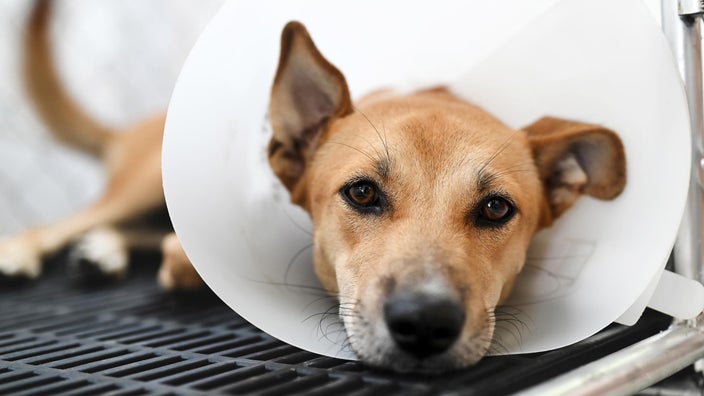
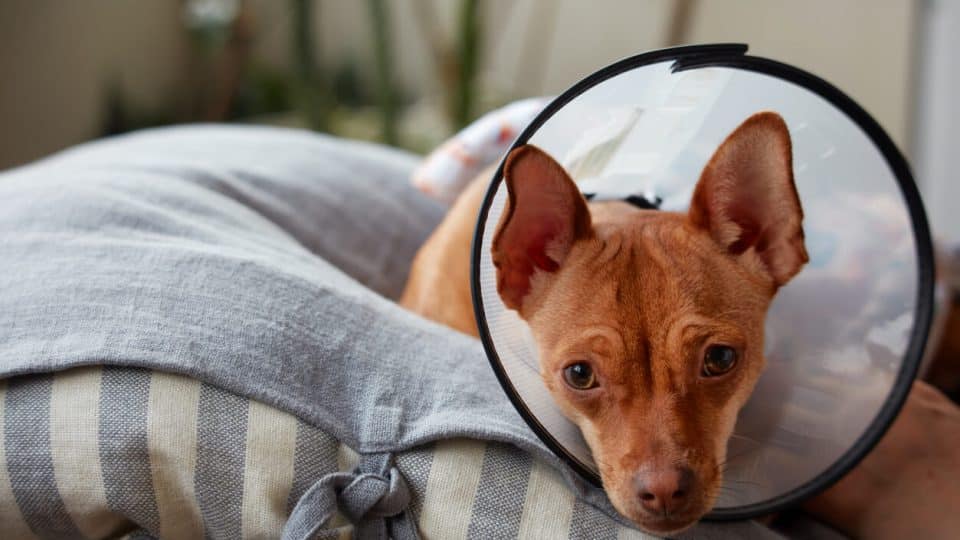
First and foremost, follow your vet's post-op instructions religiously. This means keeping the incision clean and dry, preventing your dog from licking or chewing at it (the dreaded cone of shame!), and limiting their activity.
Seriously, that cone of shame? It’s not for your amusement. It’s for your dog’s well-being. Think of it as a force field against self-inflicted wounds. And for goodness sake, don't let them jump on and off furniture! Keep them on soft surfaces and restrict their movement as much as your vet advises.
Also, keep their recovery area clean. No one wants to recover in a dusty, germ-filled den. Give them a nice, clean space to rest and heal.
And if you have other pets, make sure they’re not bothering the recovering pup. Some pets can be a little too curious, and a playful nip or lick can cause problems.
So there you have it! A little chat about keeping an eye on your newly neutered buddy. Remember, you know your dog best. If something feels off, it probably is. Trust your instincts, and don’t hesitate to reach out to your vet. They’re your partners in keeping your furry family member happy and healthy. Now go forth and give your pup some extra cuddles (gentle ones, of course!).