
Can You Get A Phd Without A Masters
Hey there, fellow knowledge seekers! Ever found yourself staring at those impressive "Dr." titles and wondering, "How on earth does one get there?" We all know the stereotypical path: undergrad, then a Master's, and finally, the big Kahuna, the PhD. But what if I told you that the path to a doctorate isn't always a straight line? What if you could, potentially, skip a whole step?
Yeah, you read that right. The question on our minds today is a pretty intriguing one: Can you actually get a PhD without a Master's degree? It sounds a little like trying to sneak past a bouncer without buying a ticket, doesn't it? But in the academic world, sometimes, the rules have a bit more wiggle room than you might expect.
The Traditional Route vs. The Detour
Let's paint a picture. Imagine you're embarking on a grand adventure to conquer Mount Knowledge. The usual map shows you stopping at Base Camp (Bachelor's), then setting up a more advanced camp at Summit Ridge (Master's), before finally launching your assault on the peak itself (PhD). It’s a solid, well-trodden path, and for many, it's the most logical way to prepare for the ultimate challenge.
But what if you're a seasoned climber, already pretty darn good at scaling rocky terrain? What if your undergrad experience was so stellar, so focused, that you feel ready to tackle the highest peak directly? That's where the idea of skipping the Master's comes in.
So, Is It Possible? The Short Answer (with an asterisk!)
The short answer is: Yes, in some cases, it is possible.
Now, before you start mentally shredding your application essays for a Master's program, let's pump the brakes a little. This isn't a universal "go ahead!" It's more of a "proceed with caution and a whole lot of research." Think of it like trying to order a fancy coffee without knowing all the fancy terms. You can do it, but you need to be very specific about what you want.
When Does This "Skipping" Tend to Happen?
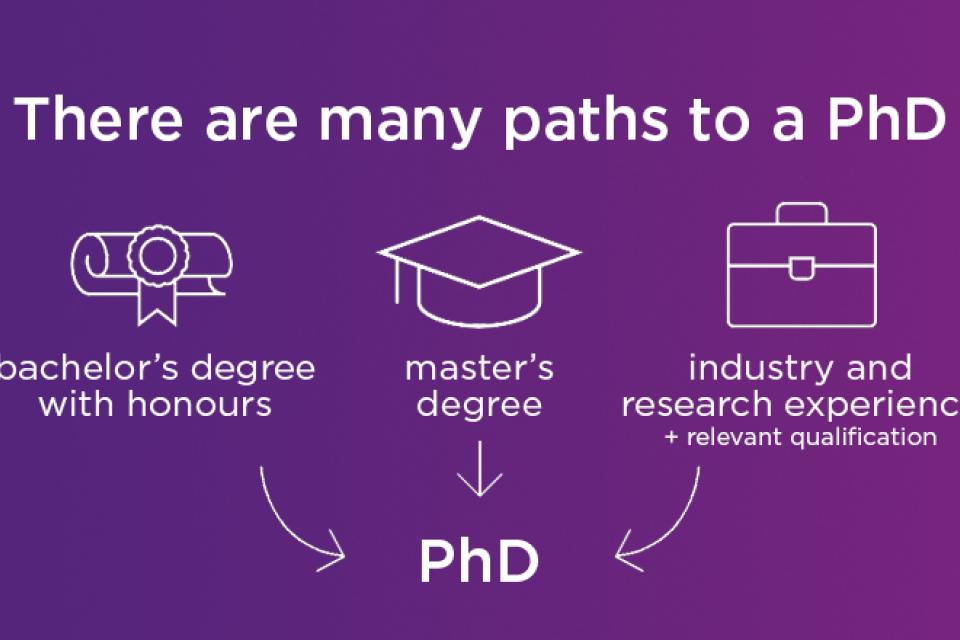
This alternative route, often called a "direct PhD" or "integrated Master's/PhD" program, isn't as common as the traditional route, but it definitely exists. It usually pops up in a few key scenarios:
1. Exceptional Undergraduate Performance
Imagine you're a student who absolutely aced their undergraduate degree, especially in a field that's closely aligned with your PhD aspirations. You didn't just get good grades; you were deeply involved in research, published papers, presented at conferences, and generally blew your professors away with your intellect and potential. In such cases, some universities might see your undergraduate work as a sufficient foundation for doctoral studies.
It's like showing up for a job interview for a senior position and, despite not having a specific management role on your resume, your portfolio of groundbreaking projects and your glowing recommendations speak for themselves. The hiring manager might think, "You know what? This person is ready for the big leagues."

2. Specific Integrated Programs
Some universities, particularly in certain countries or in specific fields (often STEM), offer programs designed to seamlessly transition students from their Bachelor's to their PhD. These aren't two separate degrees tacked on; they're structured as one continuous journey. You essentially start your PhD research much earlier in your academic career.
This is kind of like signing up for a whole meal at a fancy restaurant, where the appetizer is so substantial it almost counts as a main course, and then the main course itself is a culinary masterpiece. You get the whole experience without the distinct pause between "ordering the appetizer" and "ordering the main."
3. Fields Where Master's Degrees are Less Common
In some disciplines, a Master's degree isn't always a standard prerequisite for doctoral work. For instance, in many European countries, it's more common for students to go directly from a Bachelor's to a PhD. The academic culture and degree structures can vary quite a bit globally.

This is like realizing that in one country, everyone drives on the left, while in another, it's the right. The destination is the same (getting a PhD), but the way you navigate the roads (the academic path) can differ significantly.
Why Might Someone Choose This Route?
So, why would anyone consider skipping a Master's? Several compelling reasons come to mind:
- Time and Money: Let's be honest, degrees cost time and money. Cutting out a Master's can significantly shorten the overall duration of your studies and reduce tuition fees. It’s a more efficient way to get to your ultimate goal.
- Focus on Research: If your primary passion is deep, focused research, a direct PhD allows you to dive into that from the get-go. You might feel that a Master's would involve coursework or a thesis that doesn't align as closely with your ultimate research interests.
- Career Goals: Some specific career paths or academic positions might favor individuals with direct doctoral experience, especially if that experience is highly specialized.
What Are the Potential Downsides?
Of course, every shortcut comes with its own set of potential bumps. Skipping a Master's isn't always the best move for everyone. Here's what to consider:
- Lack of Foundational Knowledge: A Master's degree often provides crucial advanced coursework and a broader understanding of a field. Without it, you might find yourself playing catch-up in certain areas. It’s like trying to build the top floor of a skyscraper without fully reinforcing the lower ones.
- Less Exposure to Different Research Styles: A Master's can expose you to different professors, research methodologies, and academic approaches. This can be invaluable in shaping your own research skills and identifying your niche.
- Competition and Perception: While some universities allow direct entry, others might view candidates without a Master's as less prepared, even if their undergraduate record is strong. You might face more scrutiny during the application process.
- Program Structure: Not all PhD programs are designed for direct entry. You'll need to find those specific programs that cater to this pathway.
How Do You Figure Out If It's Right for You?
This is where your inner detective skills come into play! If you're intrigued by the idea of a direct PhD, here's your game plan:
- Research Programs Extensively: This is your numero uno task. Look for universities and specific departments that explicitly mention direct PhD admissions or integrated programs. Don't just assume it's possible everywhere.
- Talk to Professors and Admissions Officers: Reach out! Email potential supervisors, graduate program coordinators, and admissions departments. Ask them directly about their policies and what they look for in candidates with exceptional undergraduate backgrounds.
- Examine Your Own Strengths: Be brutally honest with yourself. Do you have a robust undergraduate research background? Are you confident in your ability to handle advanced graduate-level work immediately?
- Consider Your Field: As mentioned, some fields are more conducive to this route than others. What's the norm in your area of interest?
The Takeaway: It's About Preparation, Not Just the Piece of Paper
Ultimately, whether you have a Master's degree or go straight for a PhD, what truly matters is your readiness for doctoral-level research. A Master's is a common and effective way to build that readiness, but it's not the only way. If your undergraduate career has equipped you with the knowledge, skills, and drive to excel in a PhD program from day one, then exploring a direct entry route is absolutely worth considering.
It's a testament to the fact that the academic journey can be as unique and customized as the research itself. So, keep asking those curious questions, do your homework, and who knows? You might just find a fascinating and efficient path to your own academic summit!