
Can A Drone Fly Over Private Property

So, you've seen them buzzing around, haven't you? Those cool, sleek machines that dance in the sky like metallic dragonflies. Drones are everywhere these days, from capturing breathtaking aerial footage for movies to helping farmers monitor their crops. It's no wonder we're all fascinated! But as these amazing gadgets become more commonplace, a question pops up more and more frequently: can a drone really fly over your private property without you even knowing, or worse, without your permission? It's a question that touches on our right to privacy, the excitement of new technology, and a little bit of that "what if" curiosity that makes life interesting.
The purpose of this little dive into drone law and etiquette is simple: to clear the air (pun intended!). Understanding the rules around drones flying over private property helps everyone enjoy this incredible technology safely and respectfully. For drone pilots, it means knowing where they can and can't fly to avoid legal trouble and keep their neighbors happy. For property owners, it means understanding their rights and knowing what to do if they feel their space is being invaded. It’s about striking a balance between the freedom of flight and the sanctity of our personal space. Think of it as learning the golden rules of the sky!
The benefits of this knowledge are pretty significant. For starters, it helps prevent misunderstandings and potential conflicts. Nobody wants to be the person who accidentally becomes the subject of a neighborhood drone dispute! By being informed, drone operators can fly responsibly, ensuring they don't cause undue stress or concern to those on the ground. This fosters a more positive relationship between technology enthusiasts and the general public. For property owners, knowing their rights can be empowering. It means they can relax in their backyard without feeling like they're under constant surveillance, and they can take appropriate action if they believe their privacy is being violated.
Let's get down to brass tacks. The short answer to "Can a drone fly over private property?" is... it's complicated, but generally, it's not a free-for-all. Think of it like this: the sky isn't exactly owned by anyone in a way that stops a drone from passing through. However, the airspace directly above your home, often referred to as your "curtilage," has historically been considered part of your private property rights. This is where things get interesting.
The Federal Aviation Administration (FAA) is the main body that governs airspace in the United States. They have rules, and they're pretty clear that drones, like all aircraft, must fly safely. This includes not flying in a way that interferes with manned aircraft or poses a hazard. However, the FAA's regulations primarily focus on safety and air traffic control. They don't delve deeply into the nuances of individual property rights in the same way that state and local laws might.
So, while a drone might technically be able to fly over your property, doing so in a way that infringes on your privacy can be a big no-no. This is where the concept of "reasonable expectation of privacy" comes into play. If a drone is hovering directly over your backyard while you're sunbathing, or peering into your windows, most people would agree that's crossing a line. This is particularly true if the drone is capturing images or video that could be considered intimate or revealing.
State and local laws are often where the more specific protections for property owners lie. These laws can vary significantly. Some states have enacted specific legislation that addresses drone surveillance and privacy. For instance, a law might prohibit the use of drones to capture images of private property where there's a reasonable expectation of privacy, without the consent of the person or property owner. Other jurisdictions might rely on existing privacy laws to address drone-related issues.

What constitutes a violation can be a bit of a gray area. Is a drone that briefly flies over your property on its way somewhere else the same as one that lingers for an extended period, filming your activities? Probably not. The intent of the drone operator and the nature of the flight are often key factors. For example, a drone being used for real estate photography might get a bit closer to the boundary of your property than a hobbyist just exploring the skies. Likewise, a drone being used by a law enforcement agency for surveillance might have different considerations than a recreational flyer.
The general consensus is that while drones can traverse the airspace, they shouldn't be used to intrude upon your reasonable expectation of privacy.
When should you be concerned? If a drone is flying very low over your property, repeatedly visiting the same area, or appears to be focusing on your home or activities, that's when it might be time to pay closer attention. If you notice a drone consistently hovering outside your bedroom window or filming you in your backyard in a way that makes you uncomfortable, it's reasonable to consider it an intrusion.
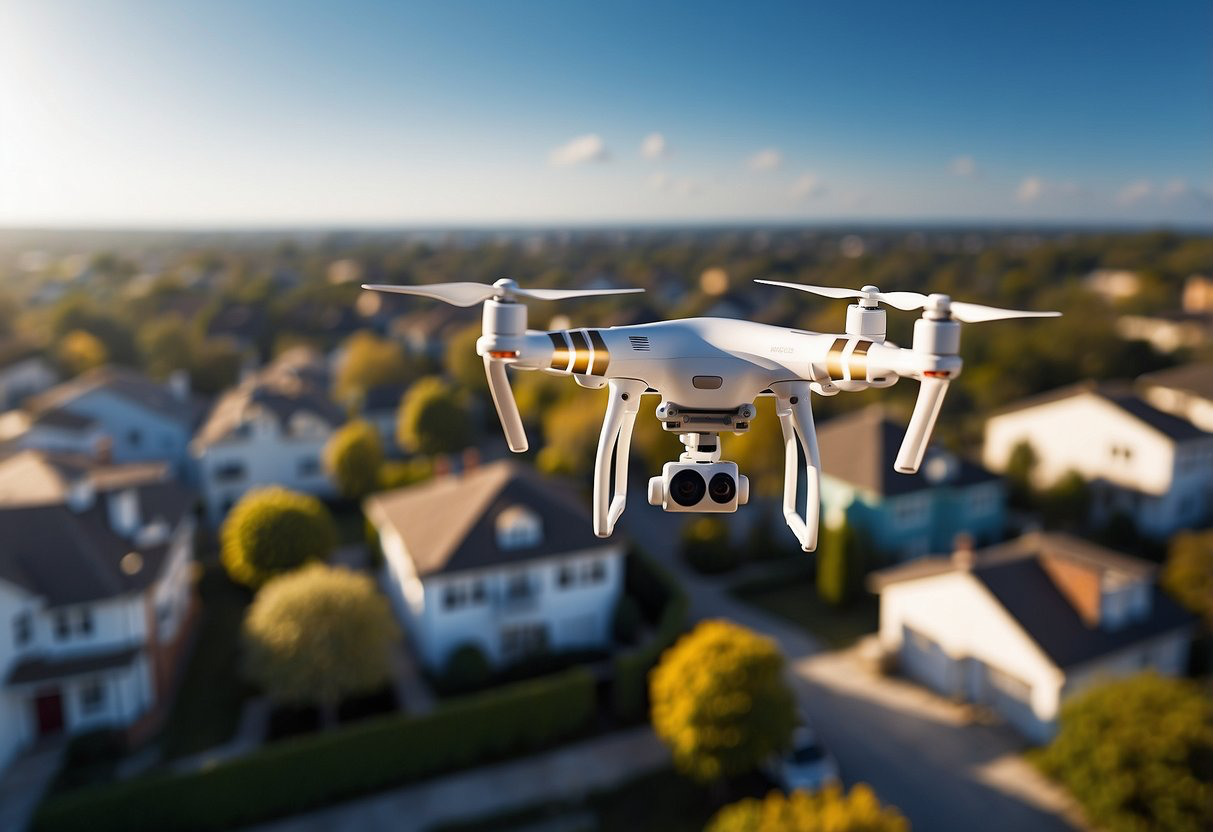
What can you do if you feel your privacy is being invaded? First, try to remain calm. Document what you're seeing. Take notes of the date, time, and any distinguishing features of the drone (color, size, markings). If possible and safe to do so, try to get a photo or video of the drone. If the drone seems to be operated by a neighbor, a friendly conversation might be the first and most effective step. Sometimes, people simply aren't aware they're causing concern.
If the situation doesn't resolve with a conversation, or if you believe the drone operator is being deliberately intrusive, you may want to contact your local authorities. They can advise you on the specific laws in your area and whether any action can be taken. In some cases, it might involve reporting a violation of privacy laws. If the drone is being used for commercial purposes, there might be specific reporting channels for that as well.
Ultimately, the law is still catching up to the rapid advancements in drone technology. However, the core principles of privacy and respect for personal space remain paramount. So, while the skies are opening up for exciting new possibilities with drones, it's important that these advancements don't come at the expense of our fundamental right to privacy in our own homes and yards. It's a space where technology and tradition meet, and understanding the rules helps everyone fly a little bit smoother.